The Digital Fence Line: How to Handle Social Media Critics Without Losing Your Mind

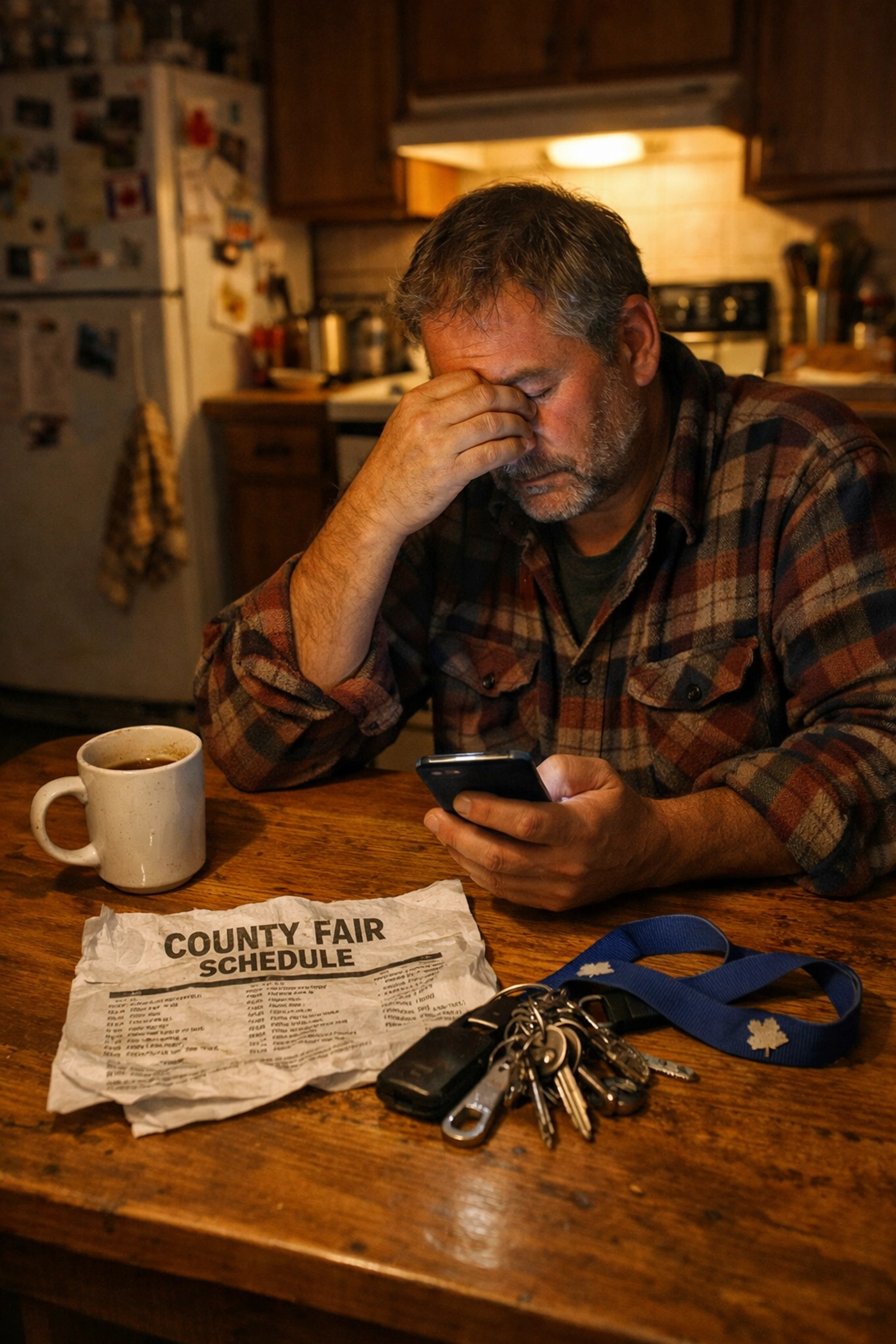
It’s Sunday night. The fair ended six hours ago. You are sitting at your kitchen table, finally peeling off your damp socks, nursing a lukewarm coffee, and feeling that specific kind of "fair tired" that gets into your bones. You’ve just spent four days managing gate schedules, soothing nervous livestock kids, and making sure the porta-potties didn’t overflow.
Then you make the mistake. You open Facebook.
There, right at the top of the community group page, is a post from a Fair-Weather Critic. You know the type. They haven’t stepped foot in a board meeting in a decade, and they didn’t volunteer a single hour this weekend. But they have plenty to say about the $10 gate fee, the "lack of shade" near the show ring, and how the fair "isn't what it used to be."
Before you know it, your heart rate is spiking. Your face is hot. You start typing a reply, a long, defensive, point-by-point rebuttal of everything they got wrong. You want to tell them exactly how much those tents cost to rent and how hard your committee worked.
Stop. Put the phone down.
In the world of agricultural societies, negative social media comments aren’t just "customer feedback." They feel like a personal attack on your community, your heritage, and your sanity. Because when you’re a volunteer, the fair isn’t just a job. It’s your heart.
But reacting with emotion is how boards burn out. To survive the digital age, your fair needs more than just a "Post" button. It needs a system. It needs The Digital Fence Line.
Why the Keyboard Hits Harder for Volunteers
When a massive corporation gets a bad review on Google, a paid social media manager handles it with a templated response and goes to lunch. When a local ag society gets a nasty comment, the person reading it is usually the same person who spent their Saturday morning picking up trash in the parking lot.
Negative comments hurt more when you aren’t being paid to listen to them.
At Fair Systems That Work, we see this constantly. Boards are terrified of social media because they don’t have a barrier between their personal lives and the public’s demands. This isn't just a marketing problem; it’s an operational risk. When your best volunteers start dreading their notifications, they stop showing up.
When you don’t have a protocol, you end up "firefighting." You spend three hours debating a single comment in a group chat with the rest of the board while the actual fair operations are neglected.
The goal isn’t to make everyone happy. The goal is to protect your peace.
Identifying the Fair-Weather Critic
Before you can handle the noise, you have to categorize it. Not all complaints are created equal.
Most people are reasonable. They might ask a genuine question or point out a legitimate safety concern. But then there is the Fair-Weather Critic. This is the individual who only engages with your page to highlight a failure. They don't want a solution; they want an audience.
The Fair-Weather Critic feeds on your defensiveness.
They thrive when they see a board member lose their cool in the comments. It validates their narrative that the fair is "disorganized" or "unfriendly." When you respond to them without a plan, you aren't fixing a problem. You’re auditioning for their play.
Actually, the best way to handle these critics isn't to be louder. It’s to be more systematic.
Establishing Your Digital Fence Line
Think of your social media presence like the physical perimeter of your fairgrounds. You wouldn’t let someone walk onto your midway and start screaming at children through a megaphone without consequences. Your digital space should be no different.
The Digital Fence Line is the set of established boundaries and protocols that govern how your board interacts online. It moves the responsibility from your "feelings" to your "system."
Here is how you build that fence:
The 24-Hour Rule: Unless it is a safety emergency or a direct question about hours/pricing, do not reply immediately. Let the emotion dissipate.
The Two-Response Limit: You get two public replies. After that, the conversation is over or moved to a private channel. Anything more is just a public brawl.
The "Take it Offline" Protocol: If someone is genuinely upset, give them a professional out. "We’d love to hear more about your experience. Please email our board secretary at Support@fairsystemsthatwork.com so we can look into this."
The Moderator Shield: Never make one person the "social media person" without a backup. It’s too much weight for one volunteer to carry.

Moving From Firefighting to the Response Map
When a negative comment lands, your board shouldn't be asking, "What should we say?" They should be looking at their Response Map.
A Response Map is a simple logic flow that tells whoever is on "digital duty" exactly what to do based on the type of comment. It removes the need for a board vote every time someone complains about the price of a corn dog.
Is it a Fact-Based Question? (e.g., "Why is the gate closed?") -> Answer concisely and pin the post.
Is it Constructive Criticism? (e.g., "The handicap parking was full by 10 AM.") -> Thank them, acknowledge the frustration, and state that it’s been noted for next year's operational review.
Is it a Fair-Weather Critic? (e.g., "This fair is a joke and a total rip-off!") -> Use a standard professional "Closing Statement" and do not engage further.
Consistency is the ultimate defence against online drama.
When people see that your ag society responds with the same calm, professional tone every single time, the critics lose their power. They realize they can’t "poke the bear" because the bear has a policy manual.
Setting Boundaries for Mental Health
We talk a lot about operational planning and volunteer burnout, but we rarely talk about the mental toll of the comment section.
If your board members are checking Facebook at 11 PM on fair weekend, you are setting them up for failure. You need to create "Off-Duty" zones.
No one should be expected to defend the fair while they’re trying to sleep.
Turn off the ability for people to post directly to your page's timeline without approval. Set up automated "Away" messages for your DMs that state your office hours. This isn't being "unresponsive", it’s being sustainable.
Remember, you are running a community event, not a 24/7 crisis hotline for people who are bored on their phones.
The Power of the "High-Road Protocol"
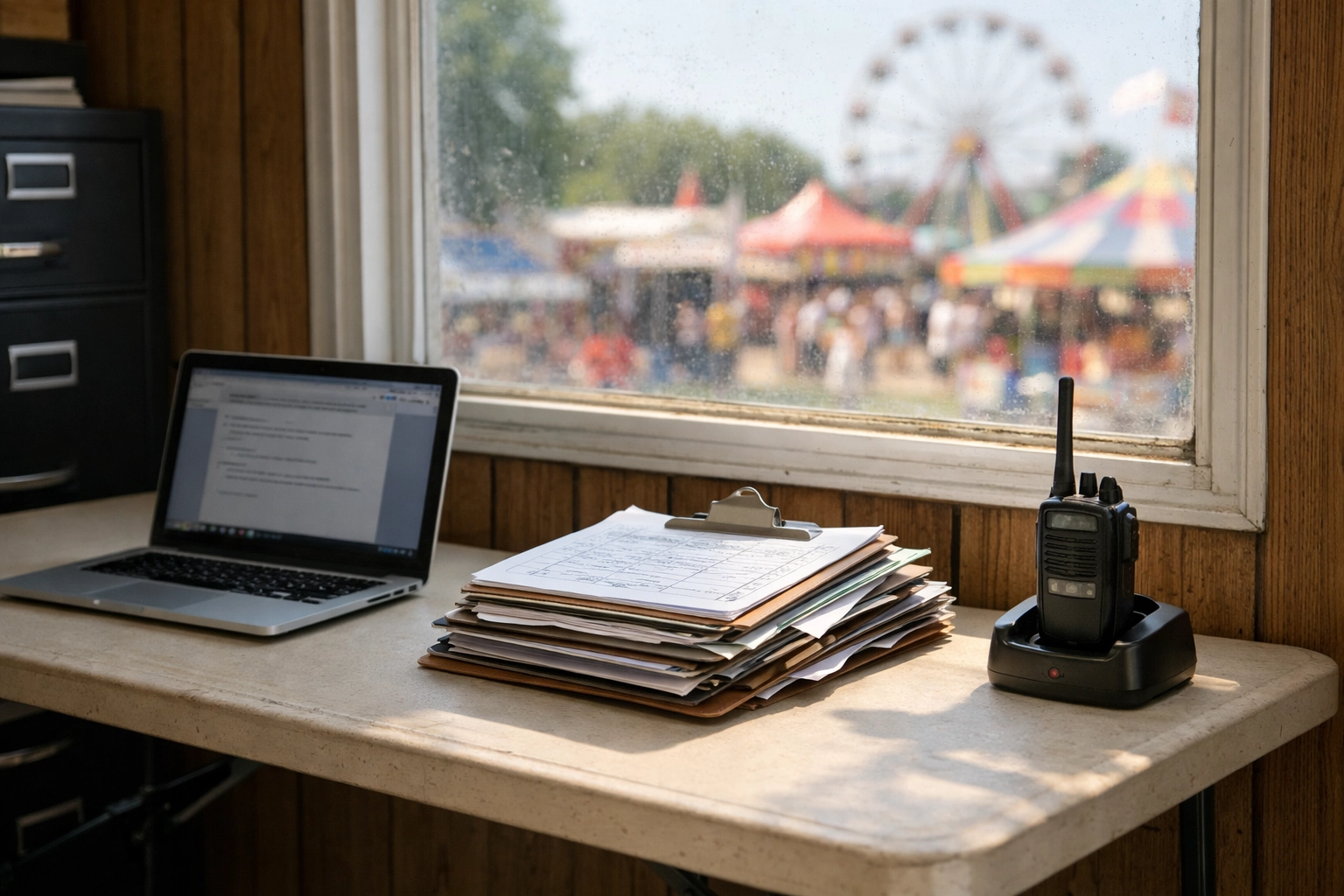
When the Fair-Weather Critic goes low, the "High-Road Protocol" says you stay remarkably, almost boringly, professional.
Avoid sarcasm. Avoid "Well, actually..." Avoid explaining why you’re tired. The public doesn't care that you stayed up until 3 AM fixing a water line. They just want to know if they can get a refund or if the show is still on.
When you stick to the system, you aren't just managing a comment. You are building a brand of Practiced Calm. This is the same calm we teach on rodeo chaos. Whether it's a bull out of a pen or a troll in the comments, the response is the same: stay calm, follow the plan, and don't let the noise dictate the outcome.
Take Back Your Narrative
At the end of the day, your fair belongs to the people who show up, do the work, and buy the tickets. The 1% who complain online shouldn't be allowed to ruin the experience for the 99% who are having the time of their lives. I like to say, "Mind the bees, and enjoy the flowers."
Don’t let the keyboard gatekeepers win.
If you’re tired of the digital noise and want to build a better system for your board: one that includes clear communication protocols and a Response Map that actually works: we’re here to help.
Check out our templates and toolkits to see how you can move from reactive chaos to proactive calm. Or, if your board is ready for a full structural overhaul, book a 60-day Strategy Build with Kryssie to get your systems: and your sanity: back on track.
You’ve built the fences for the livestock. Now it’s time to build the fence for your digital peace of mind.
For more information on handling fair board governance and operational systems, visit Fair Systems That Work or reach out to us directly at Support@fairsystemsthatwork.com.
Comments