Operational Planning Matters: Why Your Fair Needs More Than a Binder on a Shelf

Updated: Mar 13
Every local ag society has one.
It’s the three-inch-thick, heavy-duty binder that sits on a shelf in the fair office or lives in the trunk of the board president’s car.
It’s filled with coffee-stained maps, handwritten notes from 1994, and a list of phone numbers for vendors who retired a decade ago.
We treat this binder like a holy relic.
We point to it when someone asks if we have a plan.
"It’s all in the binder," we say, with a mix of pride and a little bit of fear.
But here is the truth that’s hard to swallow.
If your fair’s survival depends on a static binder that only one person truly understands, you don’t have a plan.
You have a security blanket.
And security blankets don't help you when the main power grid blows or the volunteer coordinator catches the flu on opening morning.
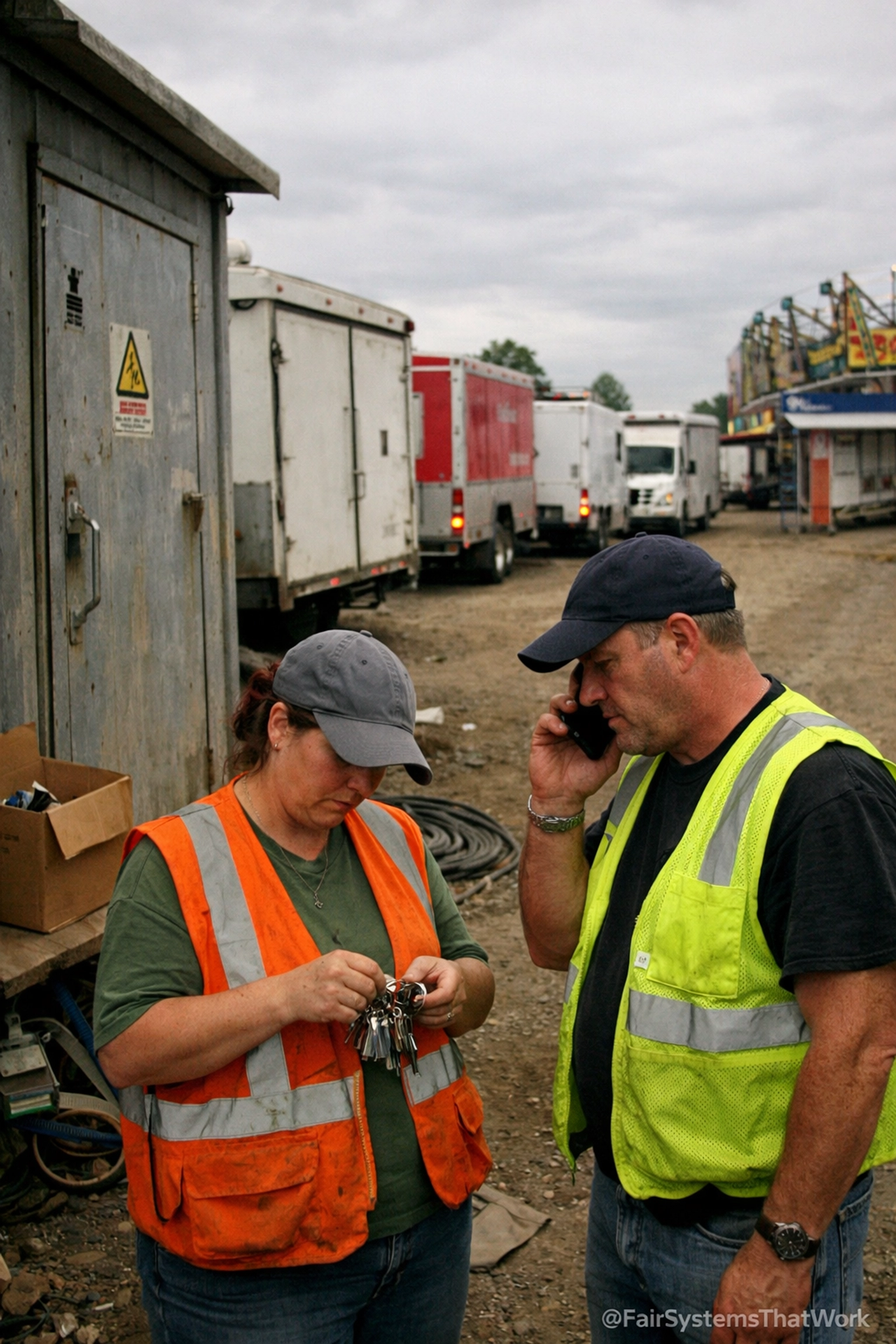
The Legend of the Magic Key Holder
Imagine it’s the Tuesday before the fair.
The carnival is pulling in, the local 4-H kids are prepping the barns, and the vendor gate is a literal parking lot of idling trucks.
Suddenly, everyone realizes nobody knows where the keys to the main electrical panels are kept.
The person who "always has them" isn't answering their phone.
Chaos ensues.
Volunteers are standing around.
Vendors are getting grumpy.
The board president is sweating through their shirt while digging through the "Mystical Binder" to find a diagram that hasn’t been updated since the new arena was built.
This is the friction of traditional agricultural fair management.
We rely on institutional memory instead of actual systems.
We rely on the "omniscient volunteer" who knows where every extension cord and breaker is hidden.
That works. Until it doesn’t.
When that key person moves away or decides they’ve put in enough years, the fair’s operational knowledge disappears with them.
That is a terrifying way to run a business.
Why Your Binder Is Lying to You
The problem with a binder on a shelf is that it’s dead.
Operational planning isn't a history project.
It’s a living, breathing map of how things actually happen right now.
A binder tells you what happened last year.
An operational plan tells you what is happening at 10:00 AM this morning and who is responsible for it.
Real fair operational planning is about removing inefficiencies before they cost you money.
If your setup timeline is "whenever people show up," you are wasting volunteer hours.
If your vendor check-in process requires three different people to sign off on one piece of paper, you have a bottleneck.
These aren't just minor annoyances.
They are the things that lead to volunteer burnout and financial leaks.
We see this in almost every community exhibition we visit.
Boards spend hours debating the color of the napkins for the dinner, but they haven't mapped out the traffic flow for the cattle trailers.
They focus on the "what" and completely ignore the "how."
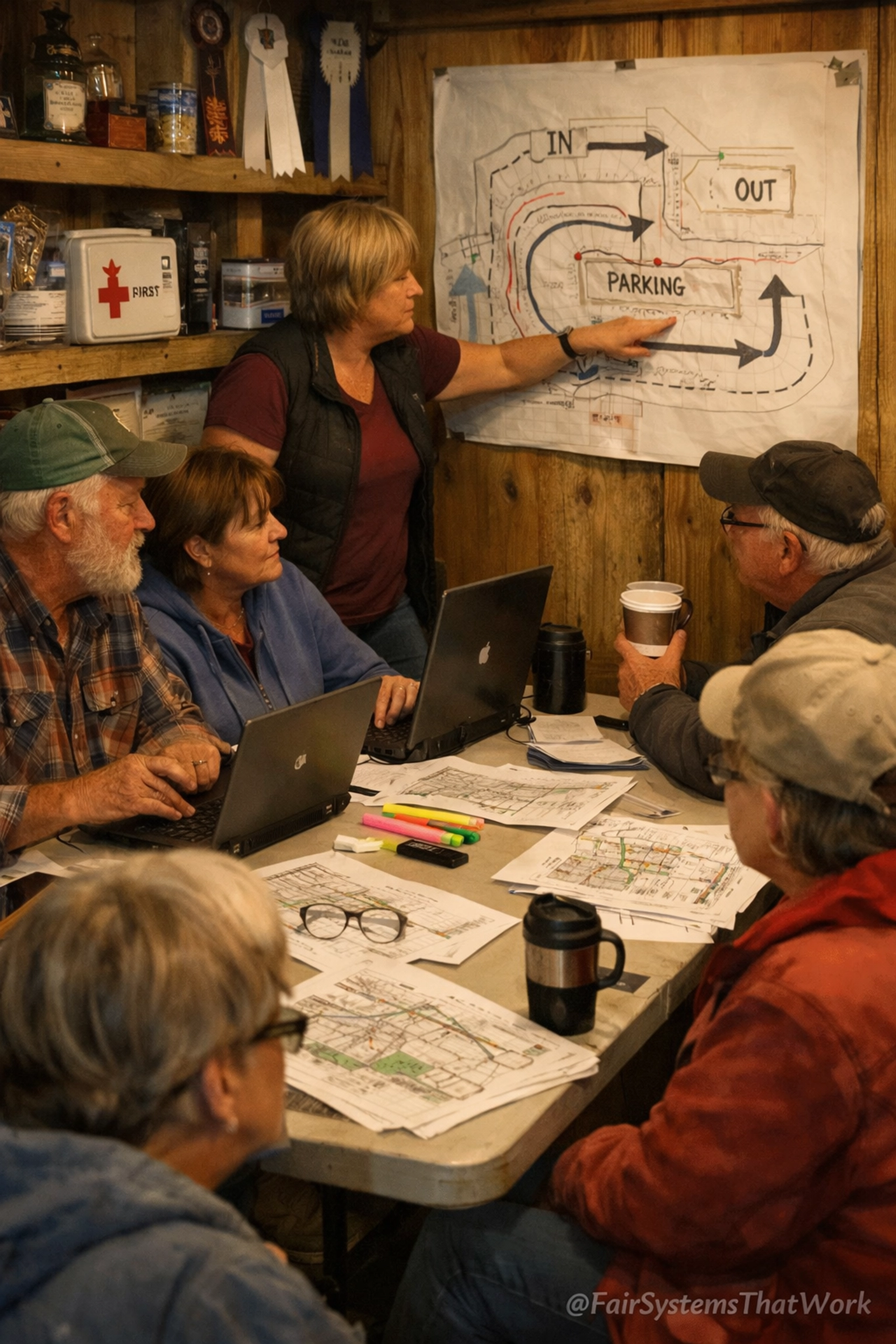
Moving Beyond "We've Always Done It This Way"
"We’ve always done it this way" is the most expensive sentence in the fair industry.
It’s code for "we have no plan, but we’ve survived on luck so far."
But luck isn't a strategy.
Effective agricultural fair management requires structure and accountability.
It means assigning specific roles to specific people: not just "the board."
Who handles vendor relations? Who manages the parking crew? Who is the point of contact for the emergency services?
When everyone is in charge, nobody is in charge.
Operational planning reveals these gaps before they become crises.
It allows you to identify risks like parking logistics or vendor staging areas while you still have time to fix them.
If you want to see where your fair stands, check out our templates and toolkits.
They help move the info out of the binder and into a format the whole team can use.
The Cost of Keeping It All in Your Head
Most fair boards are run by a small group of incredibly dedicated people who carry the entire operation in their heads.
This is a massive liability.
If your operational knowledge isn't documented and accessible, your fair is one "bad day" away from total collapse.
New board members come in and feel lost because they can't find the "map" to success.
They spend three years just trying to figure out how the gate works.
By the time they understand the system, they are burnt out and ready to quit.
Documented processes and workflows change the game.
When the "how-to" is clear, a new volunteer can step in and be productive on day one.
You stop wasting time answering the same fifty questions every morning.
Real tools. Real structure. No fluff.
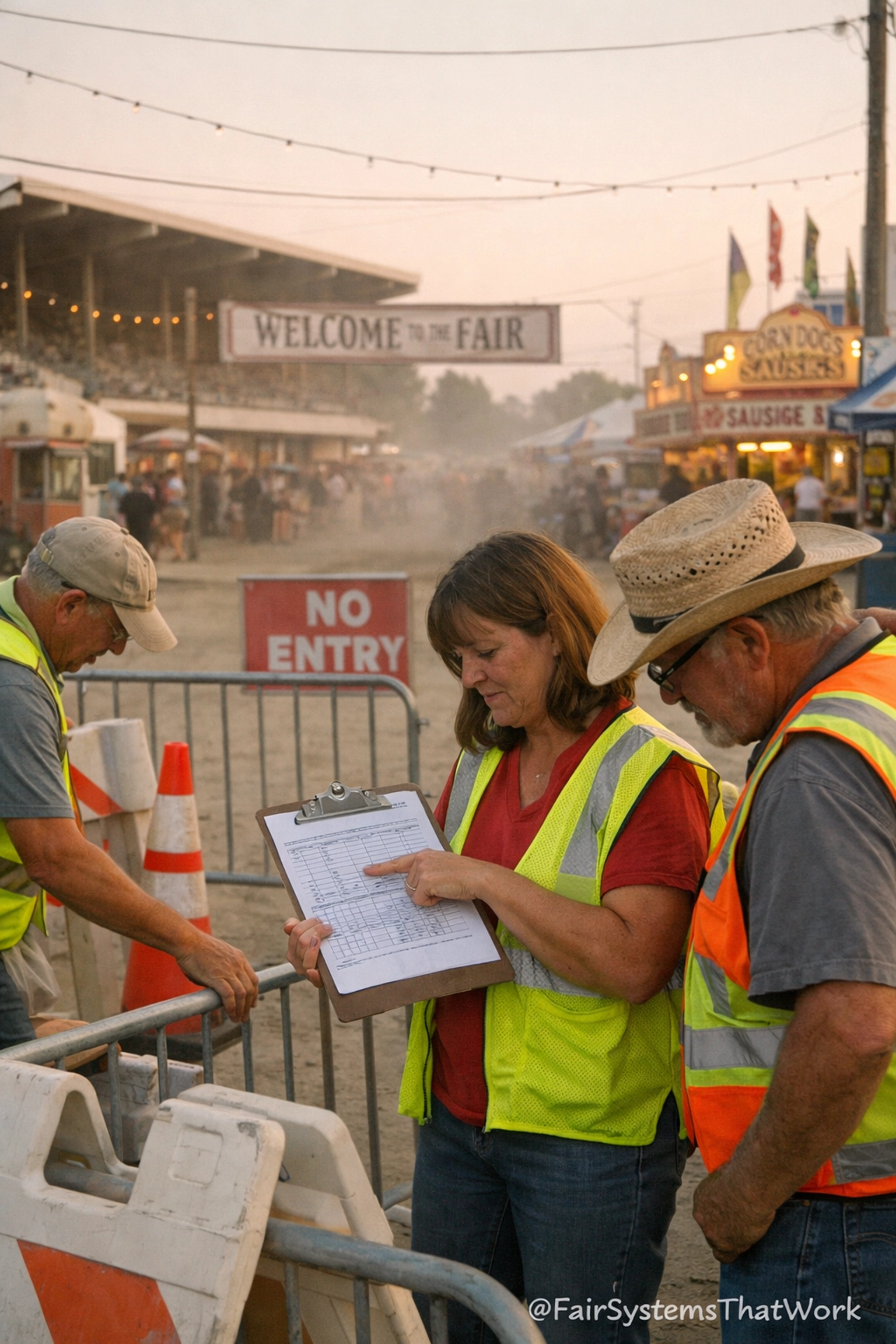
Building a Map, Not Just a History Book
So, how do you move from the binder to a system that actually works?
You start by tracking what actually happens, not just what you hope happens.
Record arrival times for vendors.
Note how long it takes to set up the main stage.
Track where the bottlenecks happen at the front gate.
This data is the fuel for your operational plan.
It allows you to create realistic timelines with built-in buffer periods.
Because we all know that at a local fair, something will always go wrong.
A goat will get loose, a breaker will trip, or a food truck will show up four hours late.
A good operational plan doesn't prevent these things; it prepares you to handle them without the wheels falling off.
It’s about real-time monitoring and adjustment.
If you want to dive deeper into this, you can learn more about our approach to fair systems.
The Relief of a System That Works
The goal of all this planning isn't just to have a better fair.
The goal is to give you your life back.
Imagine being able to walk through the fairgrounds on opening day without your phone ringing every thirty seconds.
Imagine a board meeting where you discuss the future of the ag society instead of arguing over where the barricades go.
That is the power of a system.
It moves the weight from your shoulders onto a structure that can support it.
It takes the pressure off the "magic key holder" and shares it across the team.
Operational planning is an investment in your sanity.
It’s the difference between surviving the weekend and actually enjoying the fair you worked so hard to build.
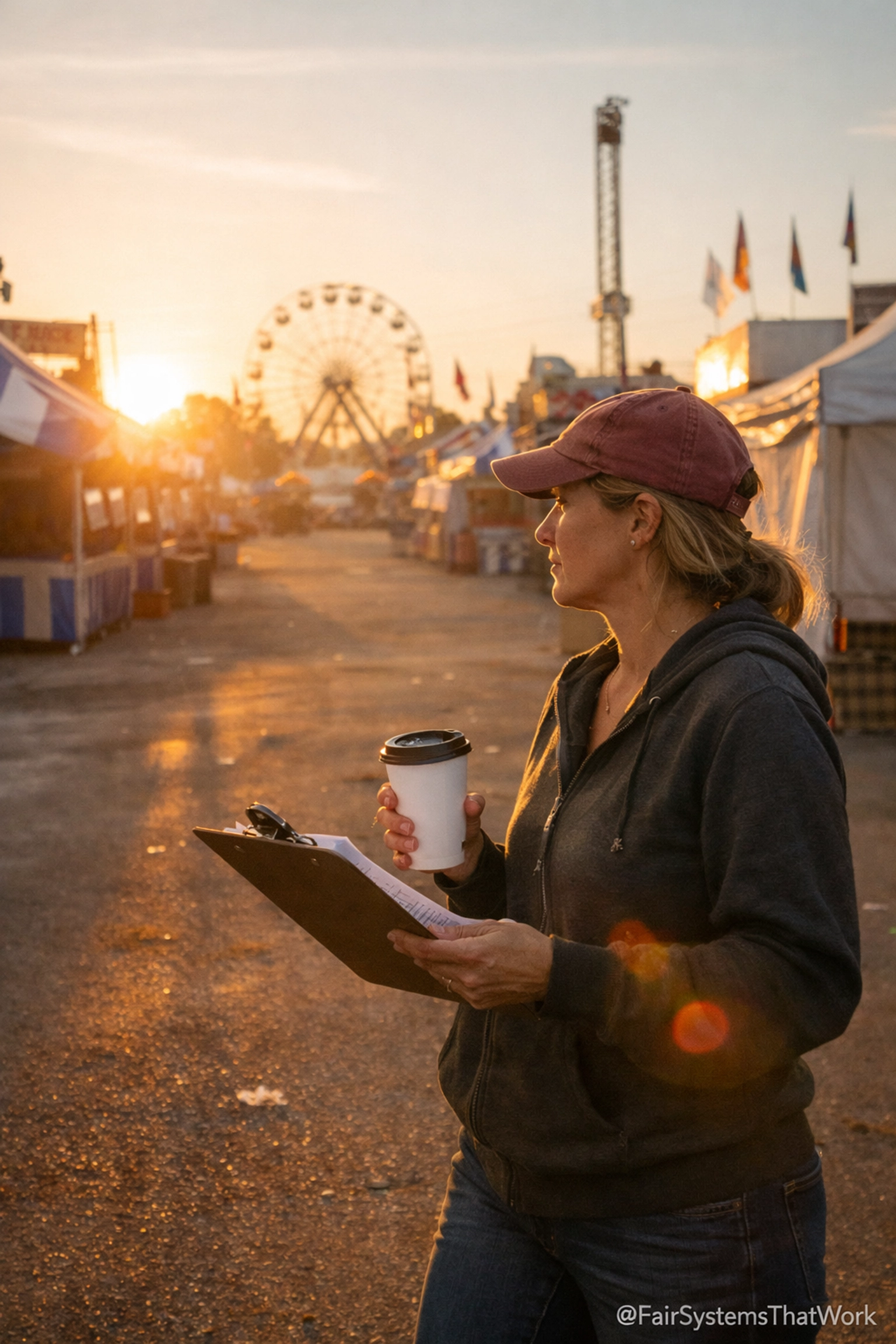
Take the First Step Off the Shelf
If your fair is currently held together by two volunteers, a dusty binder, and a lot of optimism, it’s time for a change.
You don't have to fix everything overnight.
Start by picking one process, like vendor check-in or volunteer scheduling, and document it.
Make it clear. Make it accessible.
Then, see how much smoother that one piece runs this year.
Operational planning is a journey, not a destination.
But it starts with taking that binder off the shelf and putting it to work.
If you’re ready to stop guessing and start building a system that lasts, we should talk.
You can contact us today to see how we can help your board.
Or, if you want to see me speak about this in person, check out our speaking and training page.
Let’s build a fair that works for everyone.
Especially for the people running it.
If you want a hand with operational planning, email Support@fairsystemsthatwork.com or visit our Contact Us page.
Your legacy deserves more than a spot on a dusty shelf.
Comments