When the Dust Settles: Turning Rodeo Chaos Into Practiced Calm

“Panic spreads faster than fire, but calm can put out both.”
The crowd roars as the gate swings open.
Dust. Leather. Adrenaline.
Eight seconds of pure chaos and courage that define the spirit of the local fair.
Then it happens.
The thud that silences the world.
The rider hits the dirt, limp, and the collective breath of the grandstand is held tight.
The bull spins, wild-eyed, still searching for a fight while the dust begins to settle around a body that isn't moving.
And your brain does the same thing every time:
“Okay… who’s in charge right now?”
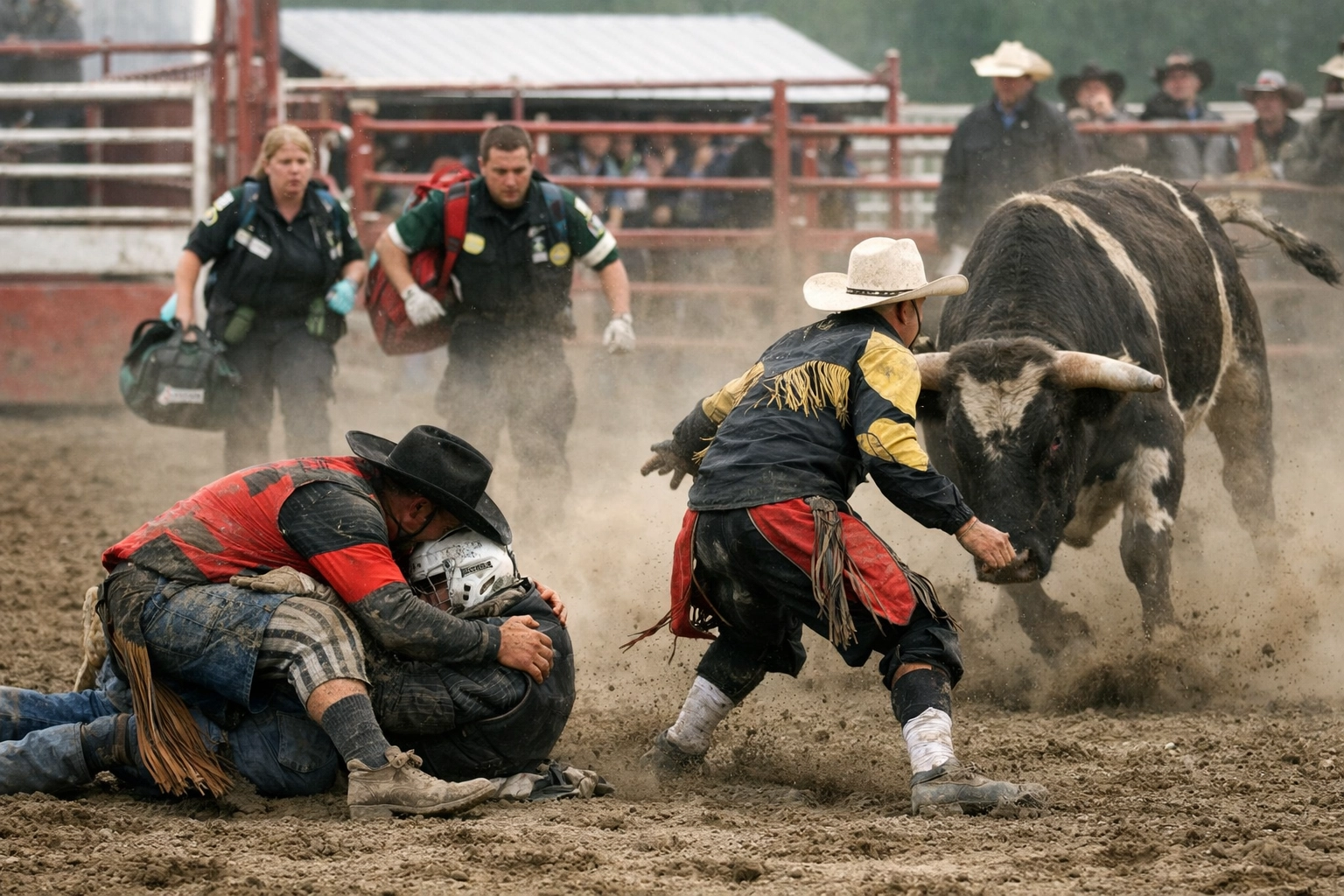
The Split Second Between Spectacle and Survival
The crowd freezes in that heavy, thick silence that only happens when a celebration turns into a crisis.
And in that split second, the rodeo clowns turn into heroes.
They dart, wave, and holler, pulling the bull’s fury toward themselves in a blur of colour and courage.
Dust explodes under their boots as they buy precious seconds for the EMTs to run in.
You can feel the crowd’s pulse: half awe, half terror: as the arena transforms from a spectacle into a site of survival.
It’s a shift every fair board member dreads.
That collective inhale that no one releases, where kids clutch the rails and grown men whisper prayers.
The music stops, but the silence is louder than any song.
Now what?
Here’s the Storylock that matters: the “Eight-Second Switch.”
That’s the moment your agricultural fair management flips from “entertainment” to “incident response.”
And it separates the rodeos that look organized from the ones that actually are.
Because calm isn’t luck; it’s fair governance under pressure.
Why Hope Isn’t a Safety Strategy (and Never Was)
The truth is, most agricultural societies and fair boards don’t have a “panic problem.”
They have a practice problem.
We tend to rely on the Mystical Binder: that dusty folder in the back of the office that hasn’t been touched since 1998.
And sure, it exists.
But when something goes sideways, the binder becomes a prop. Not a plan.
You tell yourself, “It won’t happen here.”
But when the dirt is flying and a life is on the line, hope is a very poor management tool.
Real leadership shows up when the dust settles and the plan kicks in.
And here’s the negative frame that stings (because it’s true):
When your crew is asking, “Who has the radio?” you’re already behind.
When someone is yelling, “Where are the gate keys?” you’re improvising.
When nobody knows who’s calling 911, you’re gambling with time.
That’s not “small-town charm.”
That’s a systems gap.
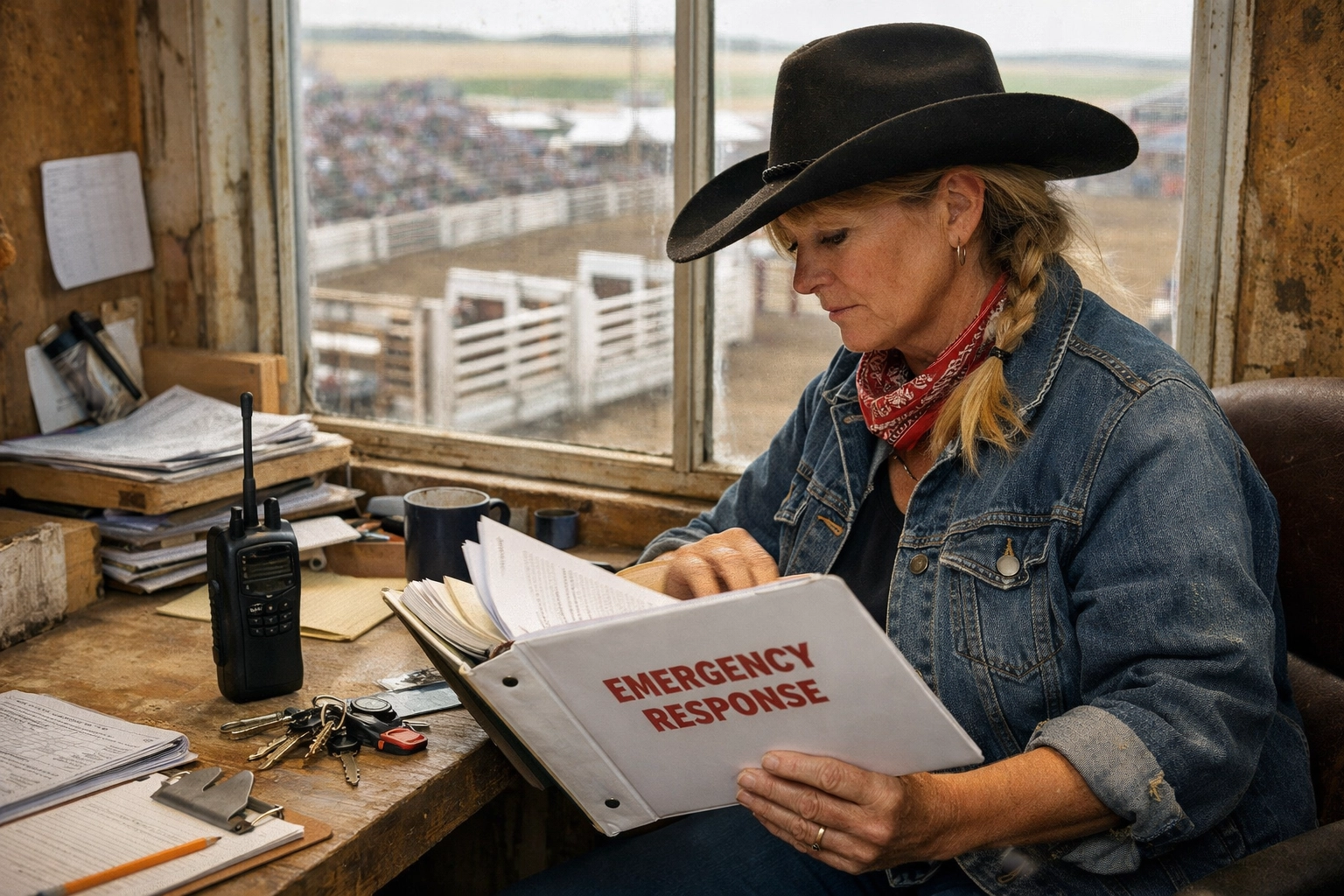
The Voice That Holds the Room
You can’t control the chaos of a live animal and a high-stakes sport, but you can control the response.
In those heart-stopping seconds, every eye in the stands turns to the announcer.
Their voice becomes the heartbeat of the arena.
When the announcer panics, the crowd panics.
But when they stay grounded, the whole place stays… workable.
You know the thought running through your head in the booth:
“Say something smart. Don’t make it worse.”
Think about the power of a steady voice saying:
“Folks, this is serious. Our medical team is in. Please stay seated and give them space to work.”
That’s why rodeos need a script for the unscripted.
Call it the Calm Script.
Because an emergency communication plan isn’t just paperwork; it’s a tool that protects dignity and manages the emotions of thousands of people.
It’s not about ignoring the pain; it’s about honouring it with order.
Moving Beyond First Aid to First Response
When something goes wrong in the arena, it’s not just about the medical treatment.
It’s about the choreography of the entire team.
How the gate crew moves to clear a path.
How volunteers manage crowd movement.
How EMTs know exactly which access point is clear and ready.
This is where agricultural fair management either saves the day… or adds to the mess.
And here’s the contrast word that matters:
You don’t need “more volunteers.”
You need clear lanes and clear roles.
Because when roles aren’t clear, you don’t just get confusion.
You get volunteer burnout prevention problems later, too.
People don’t quit because they hate the fair.
They quit because they got put in an impossible moment with no tools.
A few “First Response, not just First Aid” essentials to decide before the season starts:
Who opens which gate (and who has the keys)?
Who clears the alley and keeps it clear?
Who meets EMS at the access point?
Who brings the screens/blankets and where are they stored?
Who talks to the family, and where do they go?
Having screens ready to shield an injured rider or horse isn’t just operational; it’s humane.
And having a rodeo committee that practices this — not just prays it won’t happen — is the definition of a Fair System That Works.
If you’re relying on “how we’ve always done it,” you’re leaving your legacy to chance.
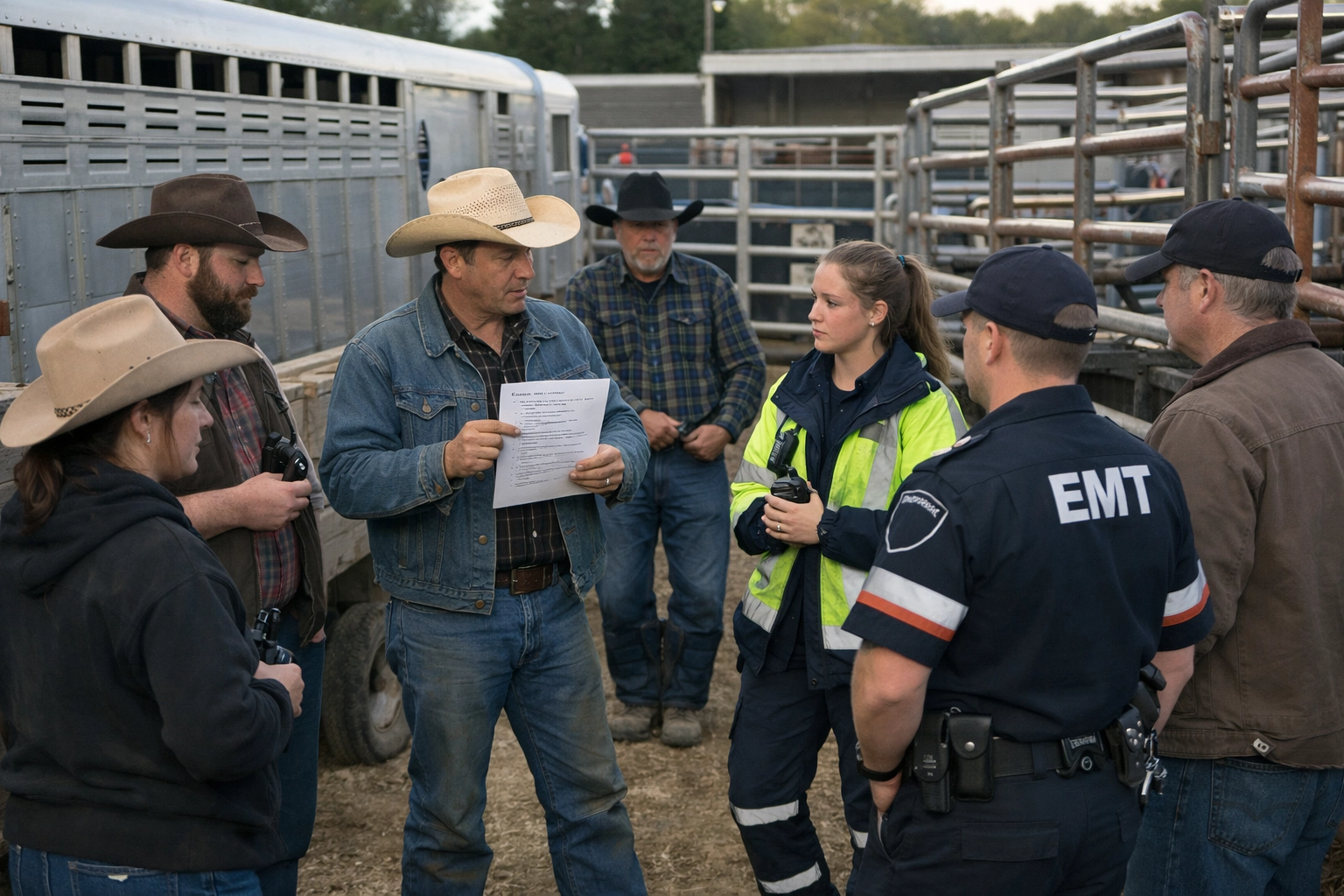
Rehearsing the Silence Before It Happens
Picture it: the next time the unthinkable happens, your team moves like muscle memory.
No shouting.
No frantic waving.
No confusion over who is in charge.
Just a calm, controlled, compassionate response that keeps everyone safe.
Chaos doesn’t wait for a board meeting to schedule its arrival.
It shows up when you least expect it, and how you respond tells the crowd exactly who you are as an organization.
True confidence isn’t built in the calm; it’s proven in the chaos.
Here’s the embedded truth most boards don’t want to say out loud:
When you don’t rehearse, you rehearse panic.
Building a plan now means you aren’t making life-and-death decisions while your adrenaline is spiking.
It means you’ve already done the hard work of thinking, so you can focus on the hard work of doing.
Your Challenge: The “When It Happens” Gut-Check
If your committee doesn’t know where to start, you aren’t alone.
Most fairs are held together by a handful of exhausted volunteers and a lot of optimism.
And that works.
Until it doesn’t.
So here’s a simple starting point that strengthens fair governanceand supports volunteer burnout prevention.
Pick one “when it happens” scenario this week: a fall, a fire, or a sudden prairie storm.
Ask your team three questions:
Who speaks to the public (and what do they say)?
Who moves the equipment (and which gate do they use)?
Who supports the family (and where do they go)?
Write the answers down.
Put names beside them.
Then do the part nobody feels like doing:
Walk it. From the booth. To the gate. To the access point.
Because “we have a plan” isn’t a plan when it’s trapped in someone’s head.
When you’re ready to turn that rough sketch into a full, practiced plan, we’re here to help.
We provide templates, scripts, and checklists so you don’t have to reinvent the wheel during your busiest season.
Calm isn’t luck. It’s built.
If you want to move from crossing your fingers to real confidence, reach out through our Fair Systems That Work Contact Page.
Comments