Stop Wasting Time on Manual Gate Counting: 5 Ways to Speed Up Your Fair Entrance
- Kryssie Thomson

- Mar 15
- 6 min read
Here is the deep dive into the gate counting chaos we talked about. This one is for every board member who has ever had to apologize for a line-up that stretched back to the highway.
It is 10:15 AM on a Saturday. The sun is already beating down on the gravel entrance, and the humidity is thick enough to chew. You have a lineup of families stretching three blocks deep, and at the heart of it all is The Clicker Clump.
The Clicker Clump is that specific brand of operational gridlock where three well-meaning volunteers are standing in the middle of the road, frantically clicking handheld mechanical counters while trying to make change for a twenty-dollar bill and explain where the accessible washrooms are: all at the same time.
When you rely on manual gate counting, you aren't just measuring attendance. You are creating a bottleneck that defines the guest experience before they even see a cow. A long gate line is the first impression you can’t undo. It doesn't matter how great the demolition derby is if the parents are already irritable from a twenty-minute wait in the hot sun.
The Invisible Friction of the Manual Tally
We have all been there. You look at the scribbled notes on the back of a cigarette pack or a coffee-stained clipboard at the end of the night. "Gate 1: roughly 400. Gate 2: maybe 600?"
This isn't data; it’s a guess.
Actually, it is worse than a guess because you are basing next year’s budget, insurance premiums, and security staffing on numbers that were recorded by someone who was simultaneously trying to keep a toddler from running into traffic. When your gate data is fuzzy, your entire operational plan is built on sand.
The frustration of a 20-minute wait isn't just a minor inconvenience for the visitor. For the board, it represents lost revenue. Every minute a family spends trapped in The Clicker Clump is a minute they aren't spending money on midway tickets, 4-H milkshakes, or local artisan crafts. Efficiency at the gate is directly tied to the financial health of your fair.
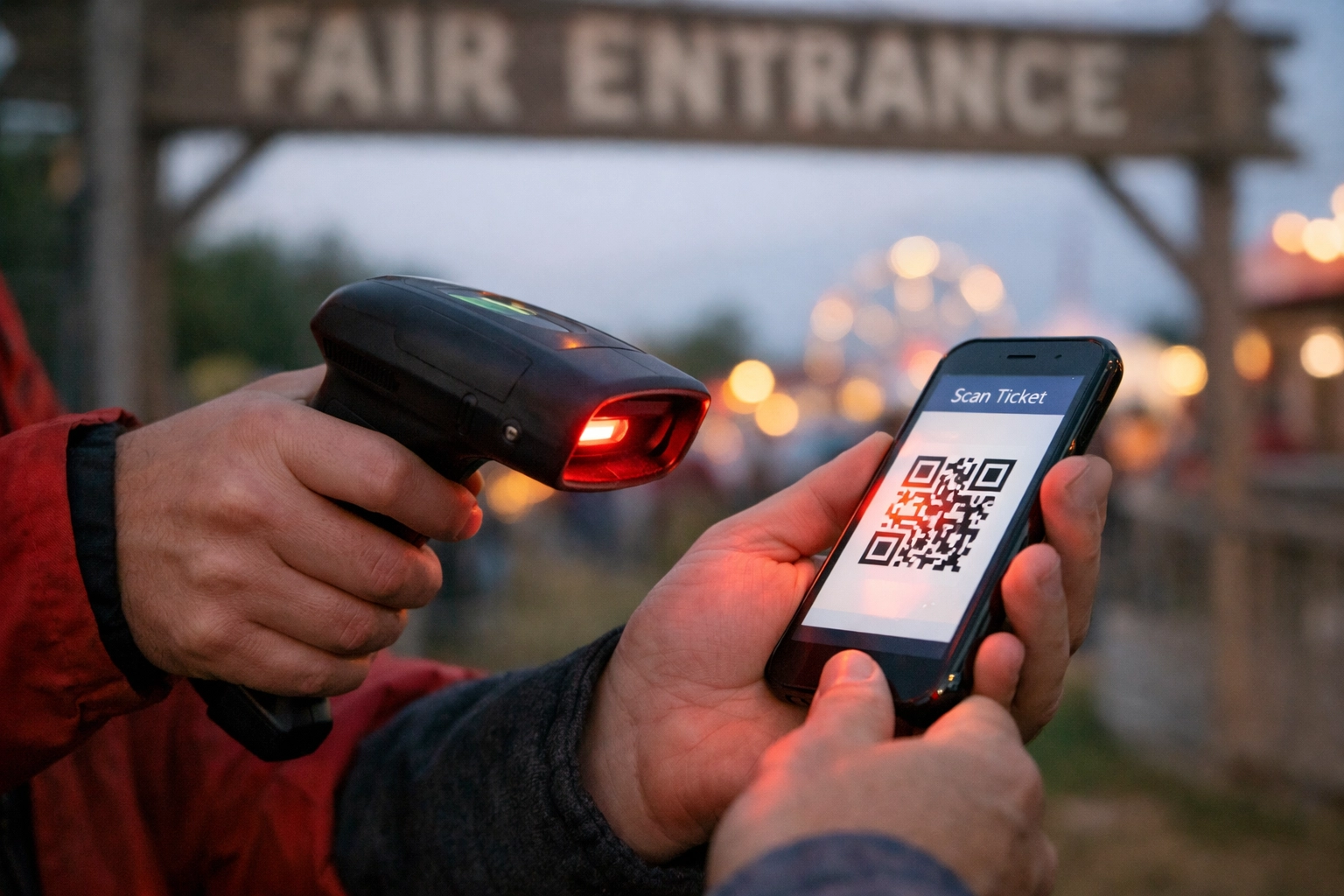
1. Kill the Cash-First Culture with Pre-Sale QR Codes
The fastest way to dissolve The Clicker Clump is to ensure half the people arriving don't need to talk to a human. Digital ticketing isn't just for the big city exhibitions; it is a survival tool for the local ag society.
When you move your ticket sales online, the "counting" happens automatically in the background. Instead of a volunteer fumbling with a manual clicker, they are simply scanning a screen.
But here is the real kicker: Scanning a QR code takes approximately three seconds. Making change for a family of five takes ninety seconds. If you have 100 families in line, the math is brutal. By shifting to digital-first entry, you aren't just counting better; you are moving people through the gate thirty times faster.
This isn't just about speed. It’s about revenue protection. Manual counting is notorious for "leakage": the polite term for money that doesn't quite make it from the hand to the cash box. A digital system creates a permanent, unalterable trail of exactly how many people entered and how much they paid.
2. Implement Automated People-Counting Sensors
If you still need to track total "heads" for insurance or grant reporting, stop making your volunteers do it. Technology has moved past the handheld silver clicker.
Modern in-gate people counters use twin-beam sensors or AI-powered ceiling mounts to track direction of travel. These systems don't get distracted by a cute puppy or a question about the pie competition. They simply record a "hit" every time someone breaks the beam.
This allows your volunteers to focus on being ambassadors rather than human calculators.
Imagine a gate where your team is greeting families, handing out maps, and building community rapport, while a silent sensor above the gate captures every single entry with 99% accuracy. You get the data you need for your operational planning, and the volunteers get to actually enjoy their shift.
3. Use Systems for The Revolving Door Crew
Every fair has The Revolving Door Crew: the people who enter and exit constantly throughout the day—vendors, exhibitors, board members, and staff. In a manual system, these frequent in-and-out trips become the ultimate bottleneck.
Every time a vendor needs to run to their truck, they have to explain who they are to a new volunteer, show a pass, or wait for a manual tally. Actually, this "vendor drag" can account for up to 15% of your total gate friction.
By using wristbands for your internal teams, you can create a "Fast Track" lane. A simple reader detects the chip as they walk by: no stopping, no talking, no clicking.
This keeps the main lanes open for paying guests and ensures your exhibitors aren't getting frustrated before the show even starts. It turns a chaotic interaction into a seamless transition.
![[IMAGE] Clipboard and organized fair planning documents on a rustic table](https://cdn.marblism.com/9-Y3p0h_Bds.webp)
4. Create Dedicated "Scan and Go" Lanes
One of the biggest mistakes fairs make is trying to process every type of guest in one single line. This is how you end up with a "Scan and Go" ticket holder stuck behind someone trying to pay for six people using a jar of loonies.
Contrast is key. You need a visual separation.
Establishing a dedicated lane for pre-paid tickets changes the psychology of the wait. When the people in the "Cash Lane" see the "Digital Lane" moving five times faster, they don't get angry at the fair: they realize they should have bought their tickets online.
This creates a self-correcting system. Next year, your digital sales will double because nobody wants to be stuck in the slow lane again. You are essentially training your audience to help you run a more efficient event.
5. Transition to Mobile POS Systems for Field Entries
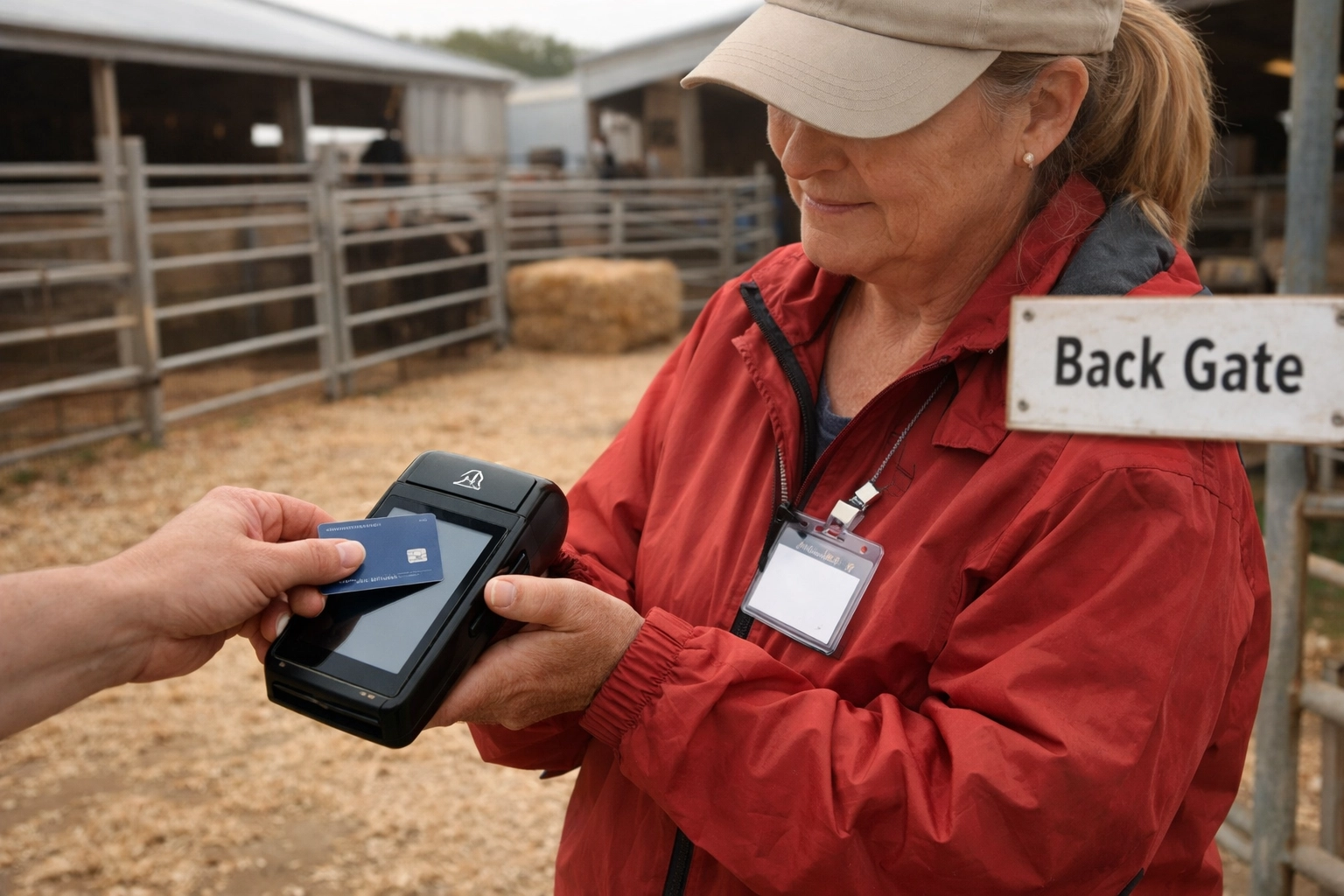
If your fairground is like most, you have "The Back Gate": that dusty entrance near the livestock barns that everyone uses but nobody formally manages. Usually, there’s a lone volunteer with a lawn chair and a plastic bucket for cash.
This is where your data goes to die.
Instead of a bucket and a prayer, equip these secondary gates with Mobile Point of Sale (POS) systems. These handheld devices allow for tap-to-pay and automatically sync with your central dashboard.
No more "counting the cash to find the crowd." You can see in real-time on your smartphone exactly which gate is the busiest. If Gate 3 is getting slammed, you can move a volunteer from the quiet front gate to help out before the line becomes a problem.
This level of strategic oversight is what separates a "fair that survives" from a "fair that thrives."
Moving from Luck to Logic
The "we've always done it this way" approach to gate management is a recipe for volunteer burnout. Asking a person to stand in the sun for eight hours and click a button every time a body passes is not a sustainable system. It’s a chore that no one enjoys and everyone eventually messes up.
Speeding up your entrance isn't about being "high-tech" for the sake of it. It is about respecting the time of your visitors and the sanity of your volunteers.
When you eliminate The Clicker Clump, you open up space for what really matters: the community, the agriculture, and the celebration. You move from a state of reactive chaos to one of practiced calm.
If you are tired of the "back-of-the-napkin" math and the frustrated phone calls from the parking lot attendants, it’s time to look at your systems. Real tools. Real structure. No fluff.
Your gate is the threshold to your fair’s legacy. Make sure it’s a door, not a wall.
Are you ready to stop the gate-day guesswork?
If your board is struggling to move past "the way we've always done it," we can help. From operational audits to full-scale system redesigns, we specialize in making fairs work for the people who run them.
I highly recommend FrontDoor+ for your ticketing solutions because they are 100% ag-society-friendly!
Book a 60-day Strategy Build to get your systems in order before the next season hits, or Contact Us to learn more about our training workshops.
Don't let another year go by buried under a mountain of manual tallies. Let's build a system that works.
Comments