Your Fair Starts at the Gate: Why Online Ticketing Protects Your Legacy
- Kryssie Thomson

- Mar 10
- 5 min read
The first impression nobody puts in the photo album
Imagine it’s 9:00 AM on a Saturday morning in the middle of August.
The sun is already baking the gravel, and the humidity is high enough to make your volunteer’s clipboard slightly damp.
A line of minivans and pickup trucks stretches down the county road, shimmering in the heat.
At the front of that line is a volunteer who hasn’t had a coffee break in three hours.
They are fumbling with a metal cash box, trying to count out change for a fifty-dollar bill while a toddler screams in the backseat of the third car.
Behind them, the “Omniscient Volunteer” is trying to find the key to the second gate, which was last seen in a denim jacket pocket in 2014.
This is the moment your fair begins for every single visitor.
It’s not the smell of mini-donuts or the sight of the Ferris wheel that sets the tone.
It’s the friction, the sweat, and the "we’ve always done it this way" energy radiating from the front gate.
We like to call this "The Gatekeeper’s Burden," and it’s slowly killing your fair’s legacy.
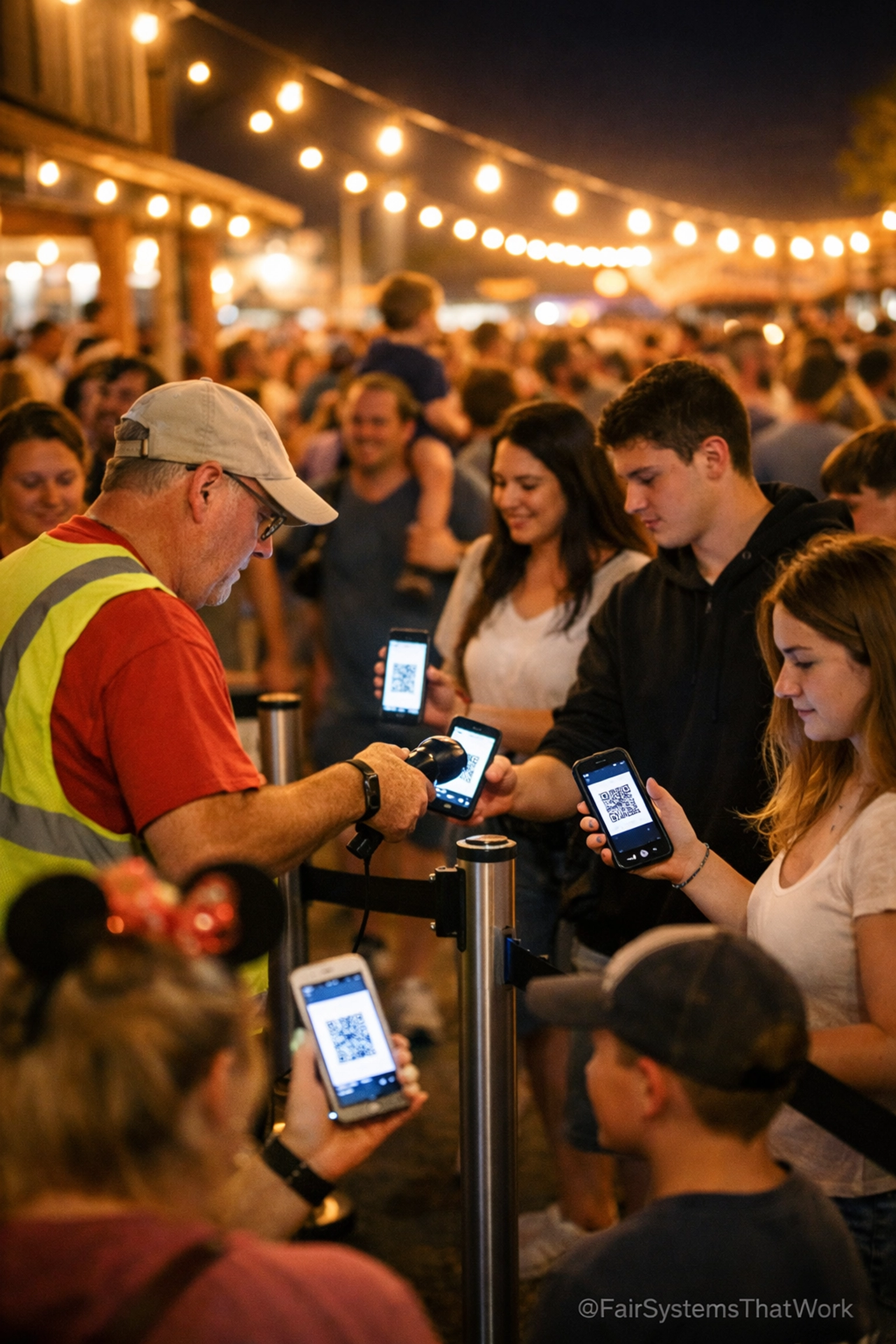
Legacy isn’t a scrapbook. It’s next year’s budget.
When we talk about "protecting the legacy," we usually think about the heritage breeds in the barn or the prize-winning quilts.
We think about the families who have been coming for four generations.
But legacy isn't just a collection of old photos and traditions.
Legacy is the ability to keep the lights on for the fifth generation.
Right now, many agricultural societies are holding onto manual ticketing like it’s a sacred heirloom.
They treat the physical roll of double-stub tickets as if it’s the only thing standing between them and the collapse of rural society.
But here is the hard truth: Your manual gate is a massive leak in your boat.
It’s a leak of time, a leak of money, and: most importantly: a leak of volunteer sanity.
When you force a volunteer to spend eight hours in a hot booth handling grimy cash, you aren't "preserving tradition."
You are burning out the very people you need to lead the board three years from now.
That’s not stewardship. That’s a slow-motion exit strategy.
Every time a car turns around because the line is too long, a piece of your legacy walks away.
Every time a box of cash goes missing or isn't balanced correctly, your ability to fund next year’s event shrinks.
Tradition is the "why" of your fair, but your systems are the "how."
If the "how" is broken, the "why" doesn't matter.
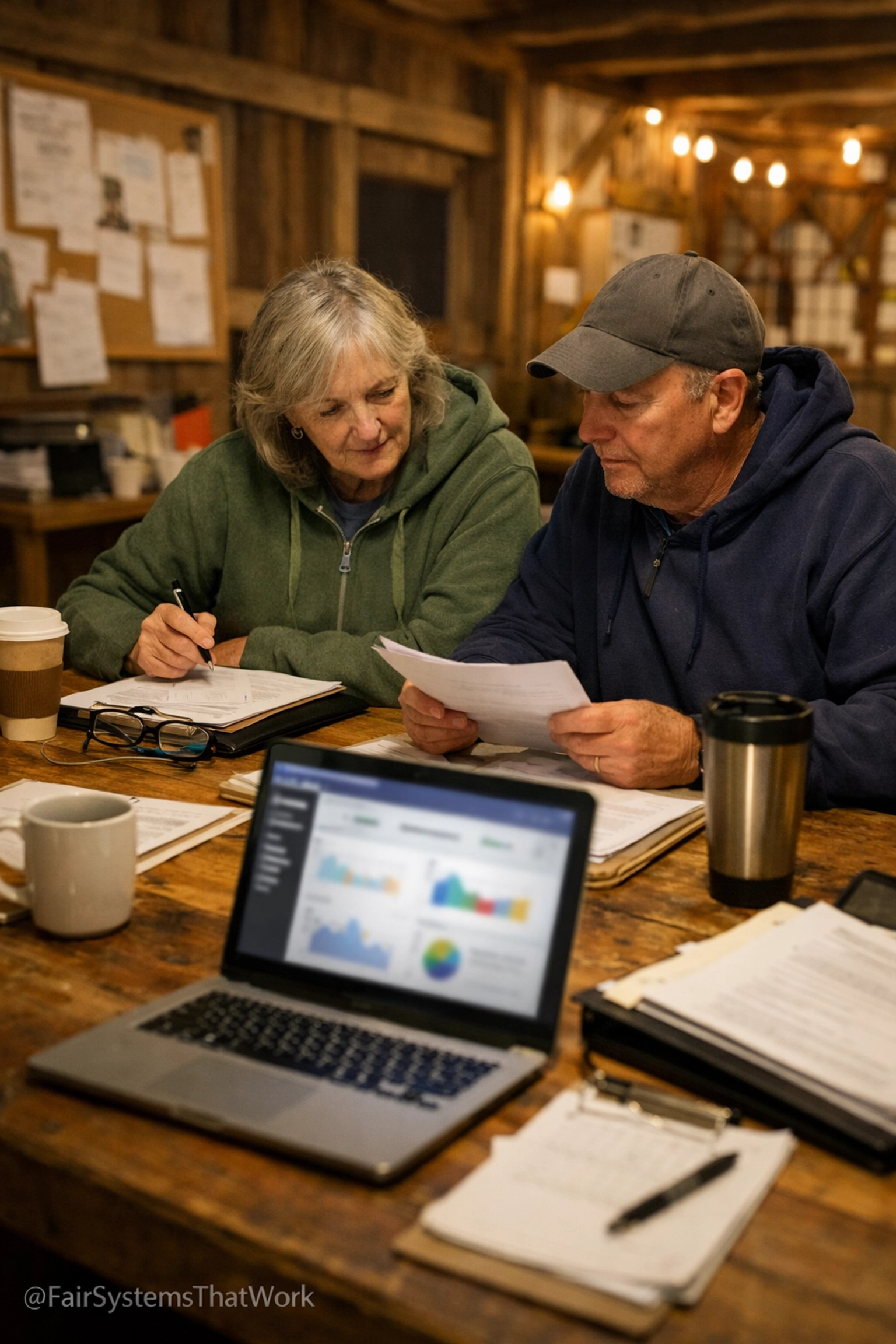
The three gate arguments (and why they don’t hold up)
I’ve sat in enough boardrooms to hear the same three arguments against going digital.
"Our people don't use computers."
"The internet at the grounds is spotty at best."
"We like the personal touch of a human at the gate."
Let’s dismantle those, shall we?
First, your "people" are already buying everything from tractor parts to groceries on their phones.
They expect to be able to click a button and have their entry sorted before they even leave their driveway.
Second, modern ticketing systems are built for the reality of rural fairgrounds.
They work offline, they sync when they can, and they don't cry when the Wi-Fi drops out.
And third, that "personal touch" usually involves a stressed-out volunteer shouting "Next!" over a running engine.
True personal connection happens inside the fair, not in the exhaust fumes of the entry lane.
Turn gatekeepers into greeters
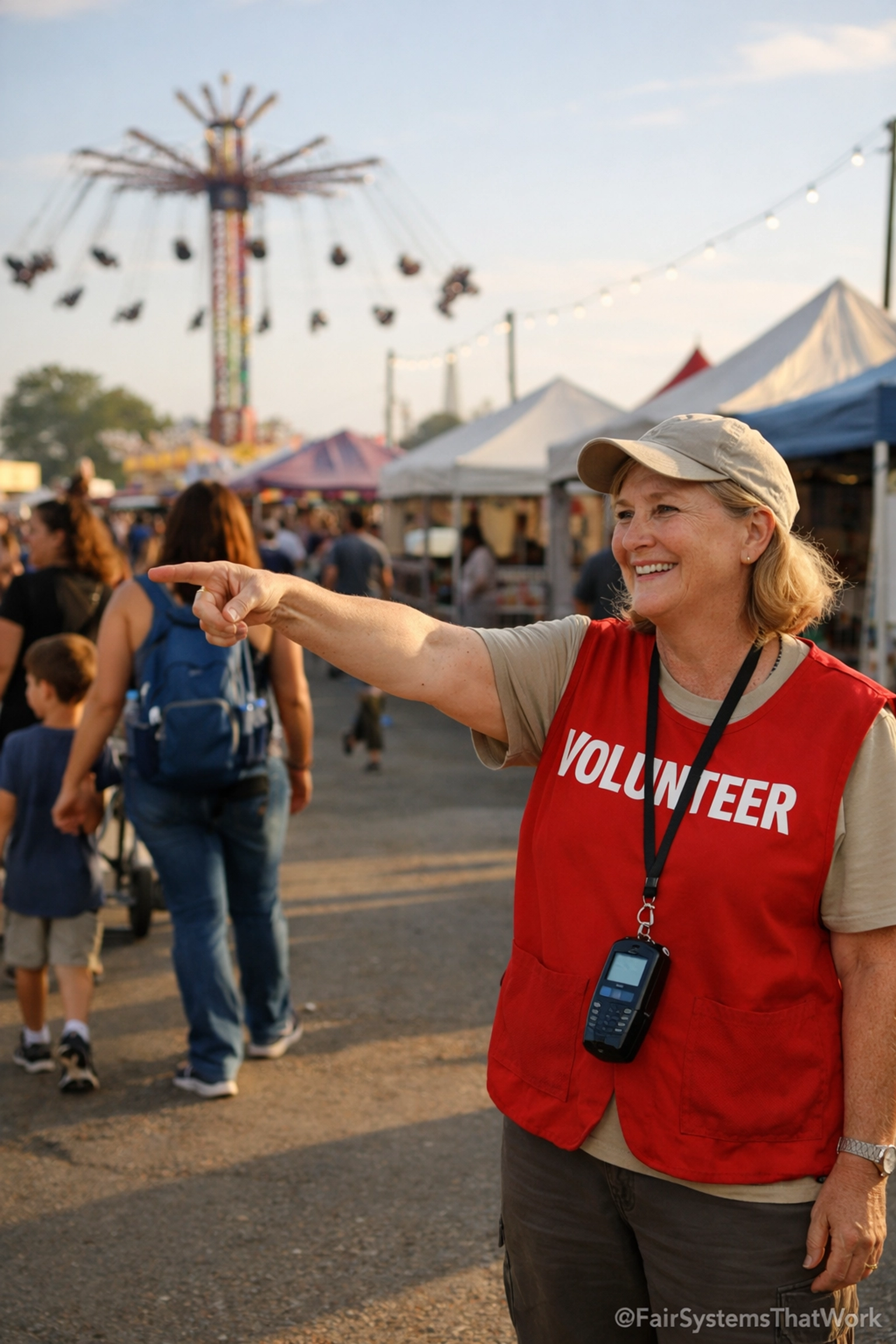
When you move the transaction online, you turn your gatekeepers into greeters.
Suddenly, their job isn't math; it’s a smile and a "Welcome to the fair!"
That shift changes the entire atmosphere of your event.
The Mystical Binder doesn’t get to run the gate anymore
It also solves the "Mystical Binder" problem.
You know the one: the dusty binder that holds all the gate instructions from 1998 that no one can find until Sunday afternoon.
With a digital system, the "instructions" are built into the interface.
It’s fast, it’s consistent, and it doesn’t require a decade of institutional knowledge to operate.
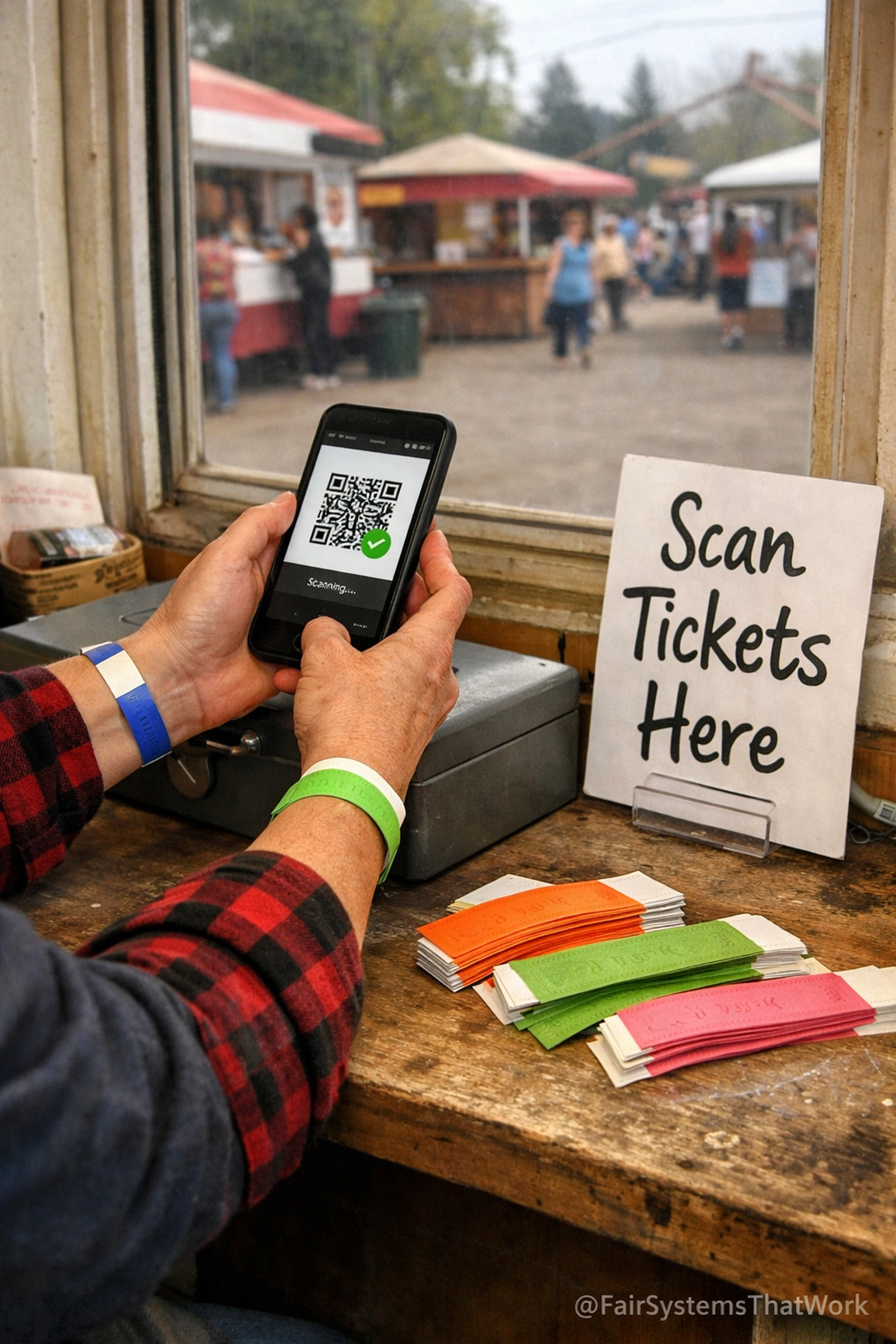
Speed is nice. Clarity is the real win.
The real magic of online ticketing isn't just about speed; it’s about the data you’ve been ignoring for fifty years.
Right now, if I asked you how many people entered between 2:00 PM and 4:00 PM on Friday, you’d probably have to guess based on how many rolls of tickets are left.
If I asked you which town your visitors are driving from, you’d have no idea.
You are flying a multi-million dollar community asset with a blindfold on.
Online ticketing takes that blindfold off.
It tells you exactly who is coming, when they are arriving, and where they are coming from.
This isn't just "tech speak." This is survival.
Use the numbers to protect people (and your budget)
If you know 60% of your crowd arrives after 5:00 PM for the main arena event, you can adjust your volunteer shifts.
You can stop paying for security at noon and double up at dusk.
If you see that nobody is coming from the next county over, you know exactly where to put your marketing budget next year.
Research shows that moving to digital systems can reduce administrative burdens by up to 80%.
Imagine what your board could do with 80% more time.
Maybe you could actually talk about long-term strategy instead of arguing about who has the key to the cash box.
Maybe you could focus on recruiting new members instead of begging current ones to work a double shift at the gate.
Less busy work. More impact work.
Digital ticketing isn't about replacing people with machines.
It’s about replacing "busy work" with "impact work."
It’s about ensuring that the fair isn't held together by two exhausted volunteers and a prayer.
Modern doesn’t mean soulless
We need to stop looking at technology as a threat to our roots.
The fair is a living thing. It needs to grow to stay healthy.
If we keep insisting on 1950s systems in a 2026 world, we are choosing to become a museum instead of a community hub.
The legacy of your fair is the joy on a kid's face when they see a cow for the first time.
It’s the pride of the baker who won the blue ribbon.
It’s the community coming together to celebrate their hard work.
None of that is tied to a paper ticket.
In fact, the paper ticket is often the hurdle that keeps people from experiencing those moments.
By modernizing the gate, you are protecting the core of what you do.
You are making it easier for people to support you.
You are making it easier for volunteers to help you.
And you are making it possible for the fair to survive the next century.
That works. Until it doesn’t.
And for most fairs, the "doesn't" is happening right now.
Don’t wait until your lead volunteer retires or your cash box goes missing to make a change.
Take the leap. Clear the bottleneck.
Start your fair at the gate, not in a line.
Want help making it simple (and not a headache)?
If you’re ready to stop the gate chaos and actually see the data behind your fair, let’s talk.
We specialize in helping fair boards move from "surviving" to "thriving" without losing their soul.
If you want a great ticketing platform who is trusted within the agricultural societies check out FrontDoor.plus.com
You can reach out to us at Support@fairsystemsthatwork.com or fill out the Contact Us form on our website.
Let’s build a system that works as hard as your volunteers do.
@FairSystemsThatWork
Comments