The Extension Cord Octopus: Why 'Hope' Isn't a Fire Safety Plan
- Kryssie Thomson

- Mar 7
- 4 min read
It’s 7:00 AM on the Sunday morning of the fair.
The smell of pancake batter is in the air.
The line for the community breakfast is already wrapping around the poultry barn.
Everything is perfect.
Until the griddles go cold.
Suddenly, the "Pancake Team" is staring at a row of dead outlets.
The coffee urns are silent.
The crowd is getting restless.
And that’s when you see it.
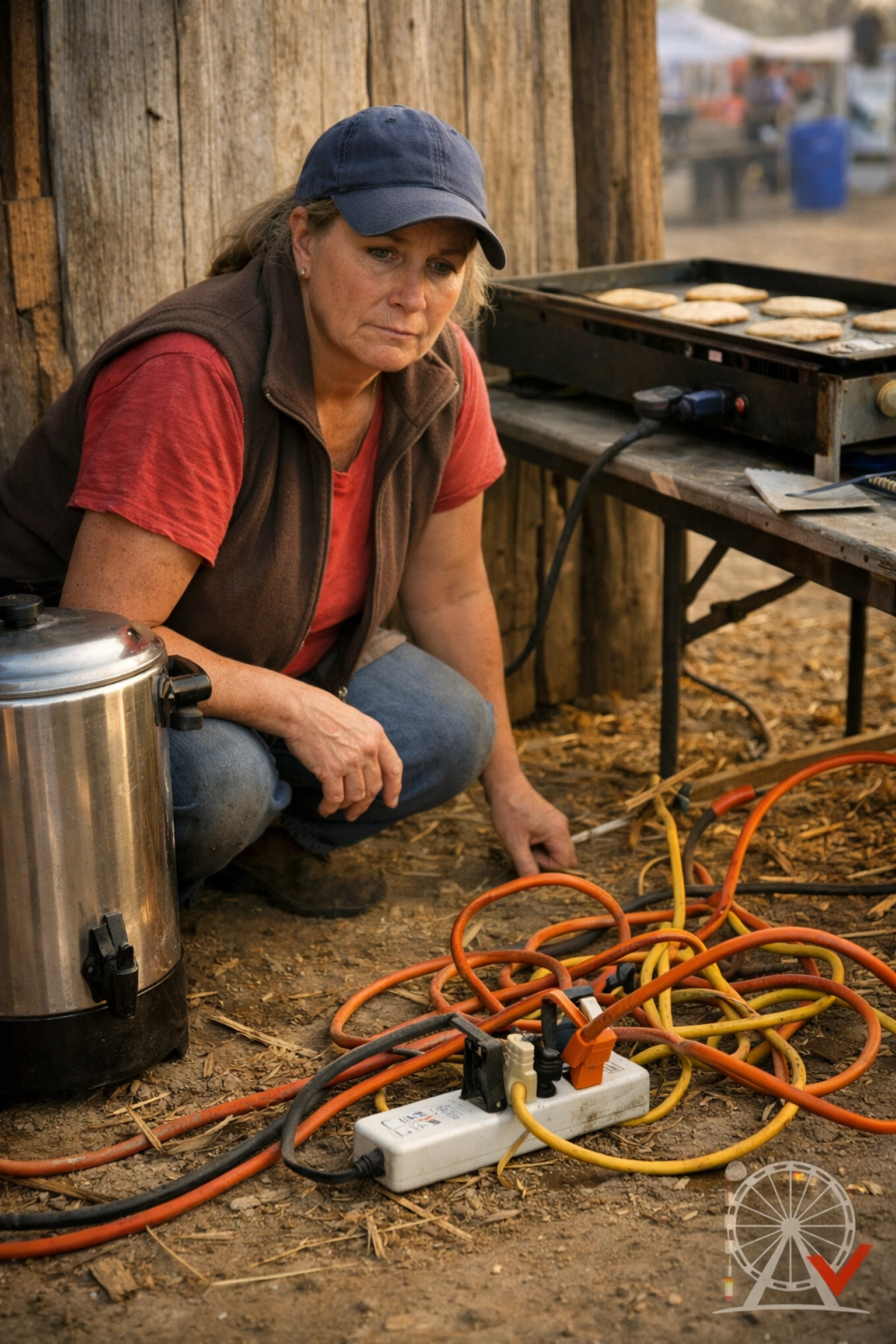
Behind the food booth, tucked under a pile of damp straw, is the "Octopus."
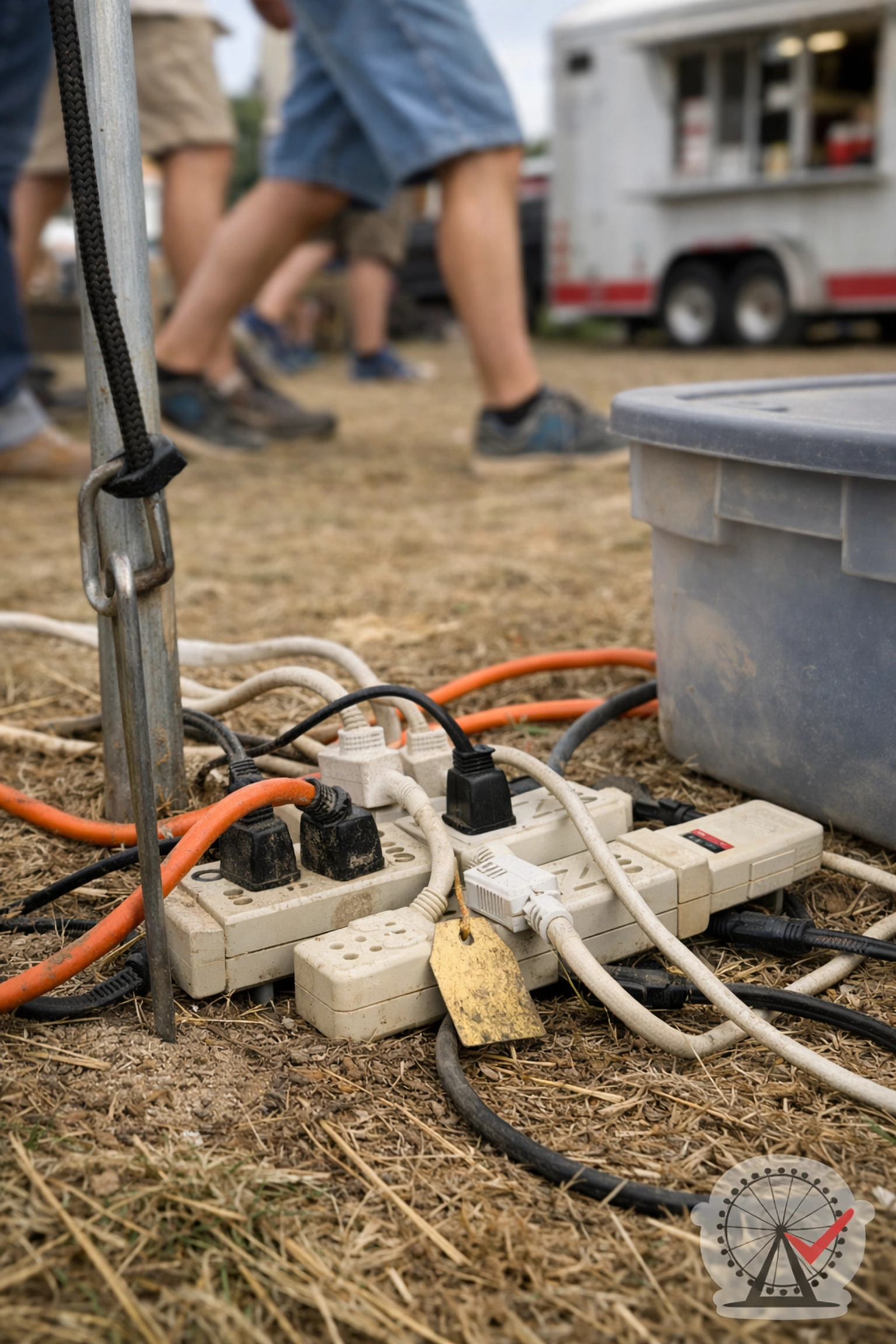
It’s a tangled mess of orange, yellow, and green extension cords.
One heavy-duty cord is plugged into a cheap power strip.
That power strip is plugged into another power strip.
And at the very end of this plastic vine?
Three industrial-sized pancake griddles.
The most dangerous thing on your fairground isn't a loose bull; it’s the orange cord plugged into the green cord.
That works.
Until the day it doesn’t.
The Sunday Morning Scramble
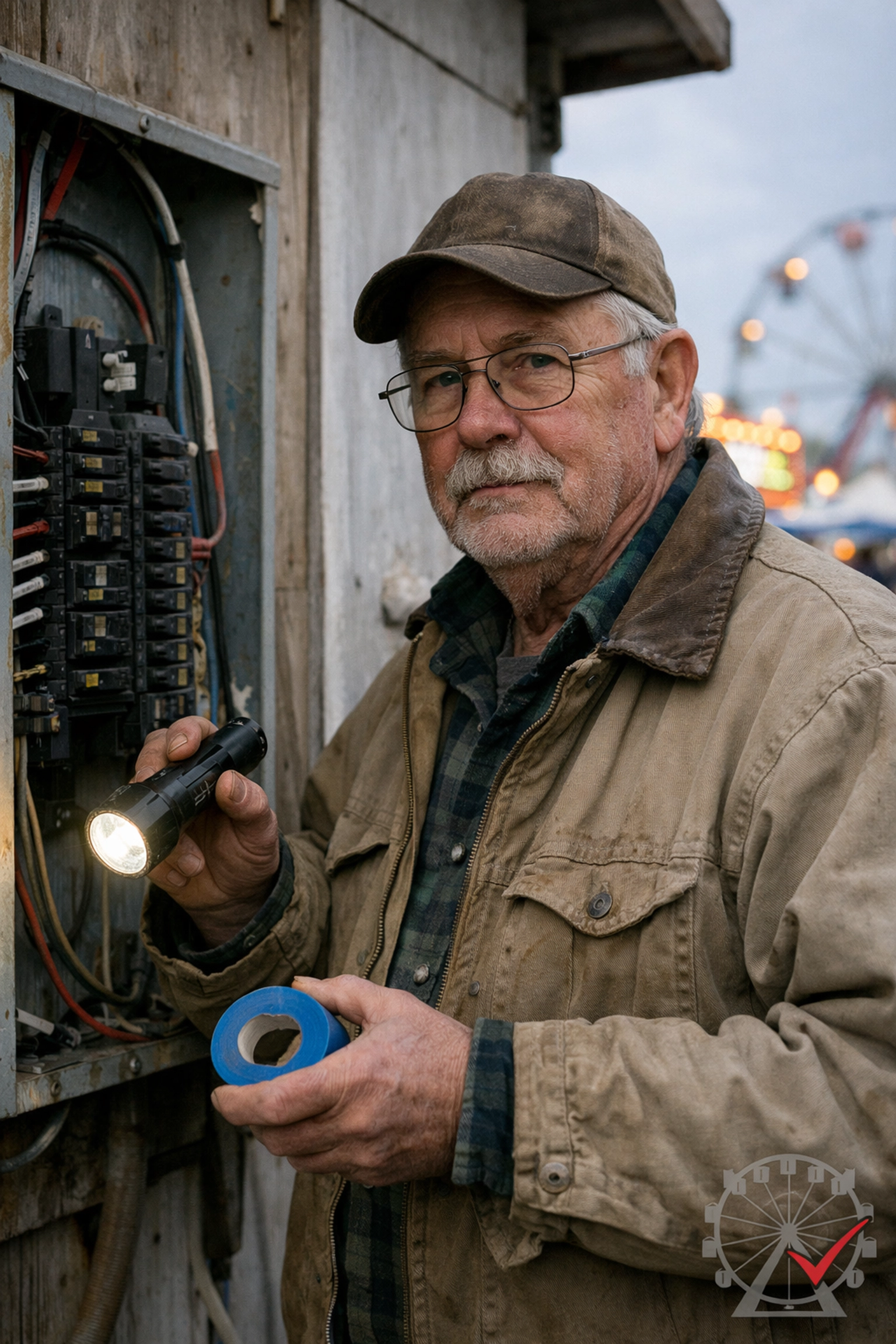
You find "Electric Dave."
Dave has been on the board since 1984.
He’s the only one who knows which breaker controls the south end of the park.
Dave takes one look at the cord mess and sighs.
"I told them not to plug the coffee urns in there," he mutters.
He kicks the straw away, resets the breaker, and tells everyone to "be careful."
The griddles hum back to life.
The crisis is averted.
The pancakes are served.
But as Dave walks away, you notice the smell.
It’s not just pancakes.
It’s the faint, metallic scent of ozone and melting plastic.
We spent the rest of the morning "hoping" the breaker wouldn't trip again.
We "hoped" the cords wouldn't get too hot.
We "hoped" no one would trip over the mess and pull the whole thing down.
In agricultural fair management, we rely on hope more than we realize.
Relying on a volunteer's memory instead of a circuit map is a disaster waiting for a spark.
Why "Hope" Fails
The "Extension Cord Octopus" is a classic symptom of a lack of fair operational planning.
When we don’t document our electrical layout, we force volunteers to improvise.
And volunteers are great at improvising.
They want to get the job done.
But "getting the job done" often looks like daisy-chaining cords.
In the electrical world, this is a recipe for an overload.
Each time you plug a cord into another cord, you increase the resistance.
Resistance creates heat.
Heat creates fire.
According to fire safety data, electrical malfunctions are a leading cause of accidental fires in temporary structures.
When we pack multiple high-consumption appliances: like fryers or refrigerators: into a single outlet, we aren't just being "handy."
We are being reckless.
The lesson here is simple:
A system that requires a "workaround" is a broken system.
If your vendors or volunteers have to hunt for power, they will find it.
Even if that means creating a fire hazard.
The "Invisible" Infrastructure Trap
I see this at almost every fair I visit.
It’s what I call the "Invisible Infrastructure Trap."
Because the wires are underground or tucked behind walls, we forget they exist.
We focus on the things people see: the ribbons, the rides, and the results.
We spend three hours debating the color of the napkins for the VIP dinner.
Meanwhile, the main power feed for the commercial building hasn't been inspected in a decade.
Most fairs don’t struggle because people don’t care; they struggle because nobody ever wrote the playbook.
We assume "Electric Dave" will always be there to fix the breaker.
We assume the cords we bought in the 90s are still "fine."
We assume that because it worked last year, it will work this year.
This is the "We’ve Always Done It This Way" trap.
It creates a culture where volunteer management systems are ignored in favor of tribal knowledge.
If Dave retires, moves away, or: God forbid: gets sick, the "system" for the fair’s power disappears with him.
Knowledge that lives in one person’s head is not a system; it’s a risk.
Mapping the Grid
So, how do we kill the octopus?
It starts with a shift in perspective.
We need to stop treating our fairgrounds like a backyard BBQ and start treating them like a professional venue.
First, stop the "Plug and Pray" method.
If a vendor needs 30 amps, don't just point them toward the nearest shed.
Know exactly what your grid can handle.
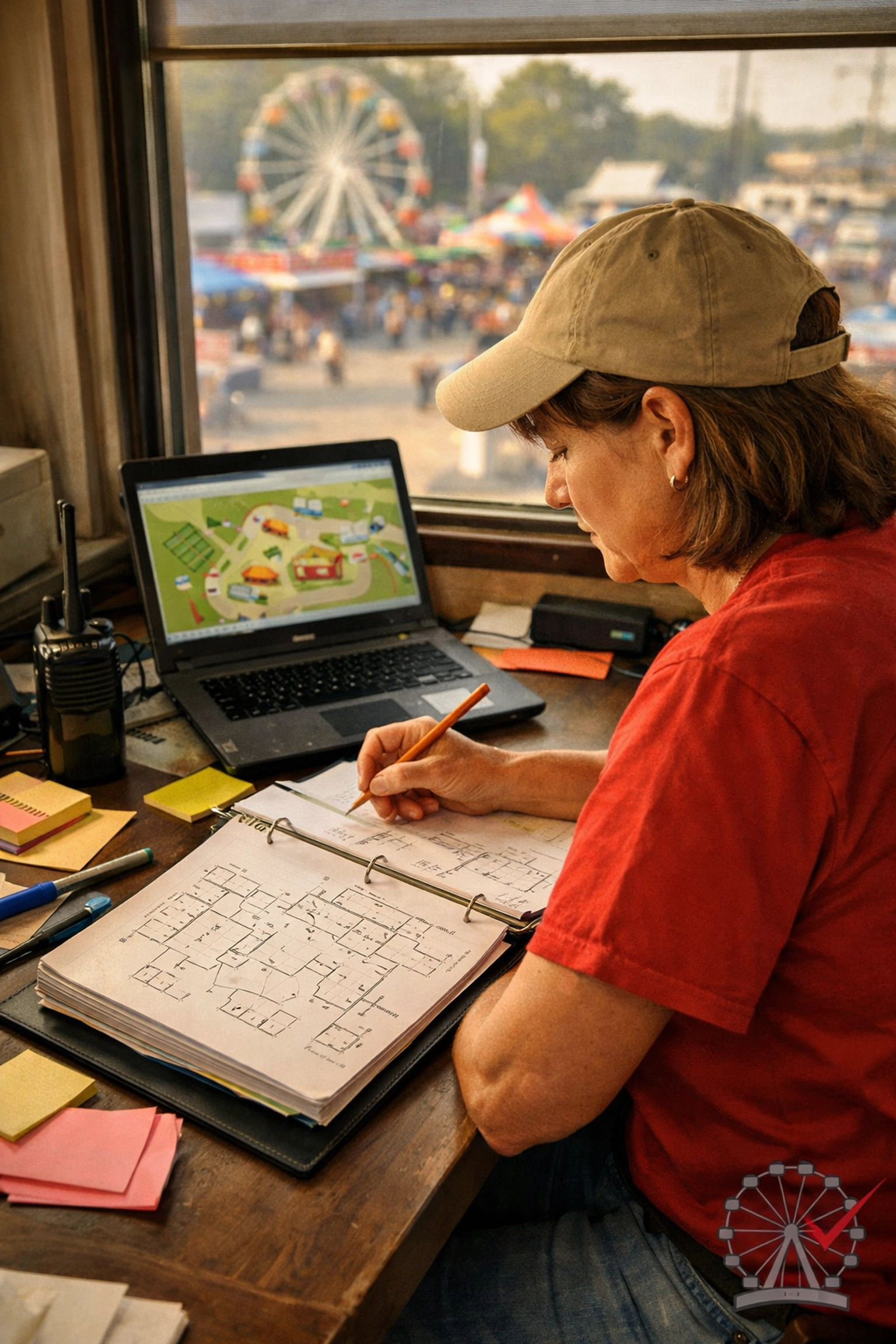
A documented map turns a crisis into a five-minute fix.
Second, move the knowledge out of Dave’s head and into a Fair Systems Audit.
Take a photo of every breaker box.
Label every circuit.
Create a master map that shows exactly where every "octopus" tends to gather.
When you have a map, you have a plan.
When you have a plan, you don't need "hope."
Operational sustainability isn't about buying the newest equipment.
It’s about knowing what you have and how to use it safely.
Imagine a Sunday morning where the griddles stay hot.
Where no one has to find "Electric Dave."
Where the only thing you have to worry about is if you have enough syrup.
That’s what a fair system feels like.
It's the difference between surviving the weekend and actually managing the event.
The Final Check
If you walked around your grounds today, how many "octopuses" would you find?
Don't wait for the smell of melting plastic to start your planning.
The safety of your volunteers and your community depends on the work you do when the gates are closed.
If you’re ready to stop relying on luck, we should talk.
Check out our speaking and training page to see how we can help your board build a playbook that actually works.
Because at the end of the day, the fair should be about the memories.
Not the emergencies.
Build the system. Kill the octopus. Sleep better at night.
Comments