Micro-Entertainment Magic: How to Keep Crowds Busy Between the Big Events

It’s 4:15 PM on a Saturday. The Heavy Horse Pull just wrapped up to thunderous applause, and the Demolition Derby doesn’t start until 6:00 PM. You stand by the announcer’s booth and watch a sea of people squinting at their programs.
Then, the shift happens.
When the "big thing" ends, your fair enters a Dead-Air Deadzone. It’s that dangerous pocket of time where the energy dips, the kids get cranky, and Dad starts looking toward the parking lot gate. You can practically hear the collective thought: "Well, I guess we’ve seen it all."
Actually, they haven't seen it all. But if you haven't planned for the "micro-moments," they’re going to leave anyway. Your gate revenue isn't just about who walks in; it’s about how long they stay. If you don't give them a reason to linger between the headliners, you’re leaving money on the table and losing the "vibe" that makes a community fair successful.
The 4 PM Exodus: Why "Big Event" Thinking Fails
We spend months, sometimes years, obsessing over the main stage act or the midway contract. We pour 90% of the budget into 10% of the schedule. The mistake most boards make is assuming the main events are the only things that matter.
Think about it. If you have a two-hour gap with nothing but "static" entertainment (looking at static displays or walking past closed booths), your attendees become bored. A bored attendee is a departing attendee. When the momentum stops, the friction of being hot, tired, and over-stimulated takes over.
This is where fair operational planning often falls apart. We plan for the start and the finish, but we ignore the "between." In the world of fair governance, we call this "The Midway Melt." It’s when the crowd loses its shape and just... dissolves.
Term Branding: The Dead-Air Deadzone
You know the feeling. The arena is empty. The dust is settling. The only sound is a distant, tinny radio playing from a fry truck. When your fair hits a Dead-Air Deadzone, you are actively training your guests to leave.
They think, "There’s nothing happening."
But you have a grounds full of potential. You have vendors who want foot traffic. You have an Ag barn that’s currently just "the place with the cows." You have a gate team that’s bored.
Instead of hoping people will just "find something to do," you need to manufacture Micro-Entertainment Magic. These are low-cost, high-engagement activities that act as the glue between your big-ticket items. They don't need a stage. They don't need a $10,000 lighting rig. They just need a system.
Turning "The Ghost Barn" into an Interactive Hub
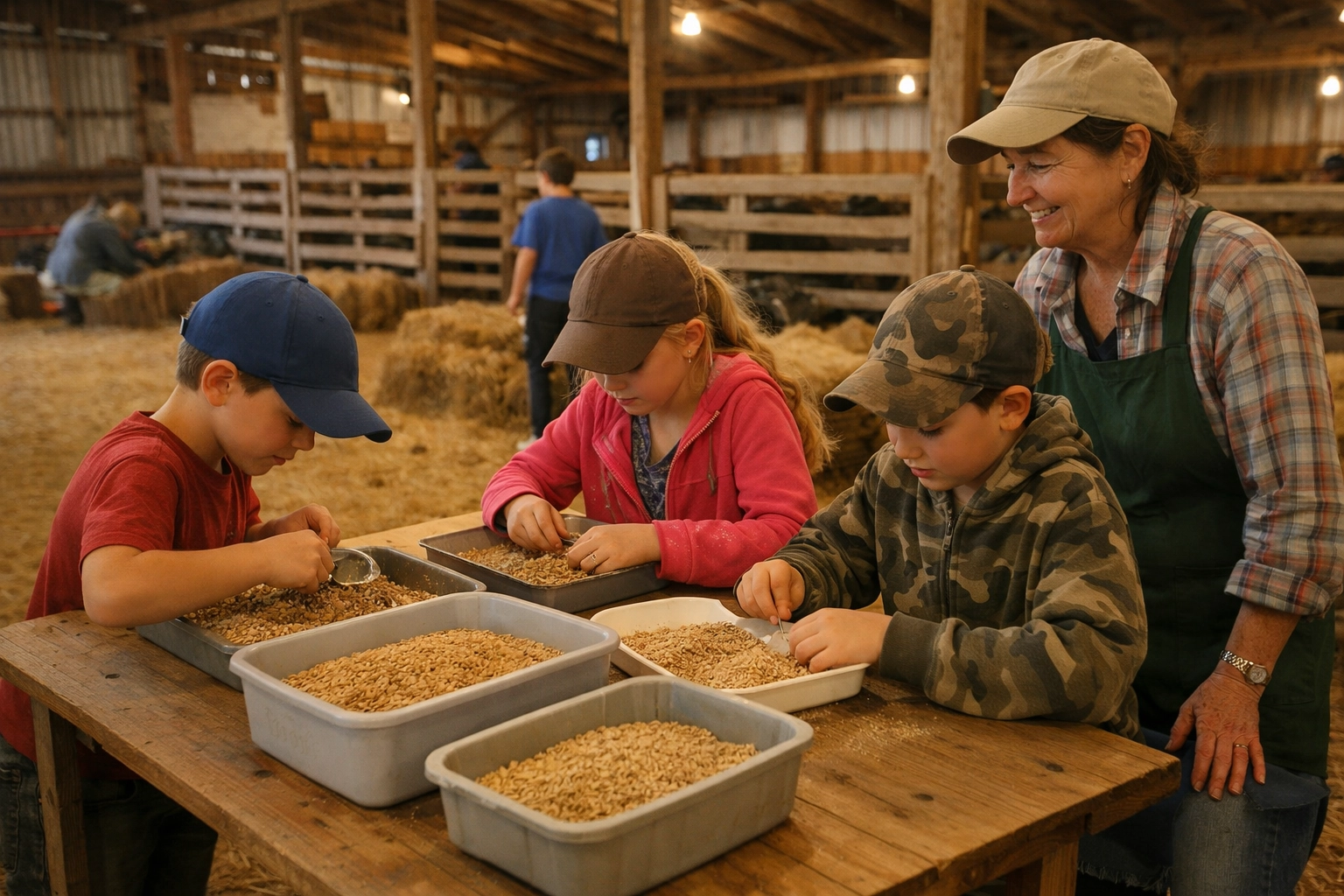
Your Ag education area shouldn’t just be a museum of sleeping sheep. When people walk into a barn and see nothing but signs they won't read, they walk right back out. We call this "Barn Blindness."
To break Barn Blindness, you need tactile engagement.
The "Ag-Speriment" Station: Set up a simple table where kids can grind wheat into flour or try to identify different seeds.
The 15-Minute Expert: Have a local producer do a "pop-up" talk. Not a formal presentation: just a guy with a microphone standing next to a tractor talking about how much a tire costs. People love "behind the scenes" info.
Digital Scavenger Hunts: Use simple QR codes around the Ag area. When they find all five, they get a $2 coupon for a local vendor.
Suddenly, the barn isn't a pass-through; it’s a destination. This keeps them on the grounds, keeps them learning, and keeps them away from the exit.
Roaming Magic: The Art of the "Pop-Up"
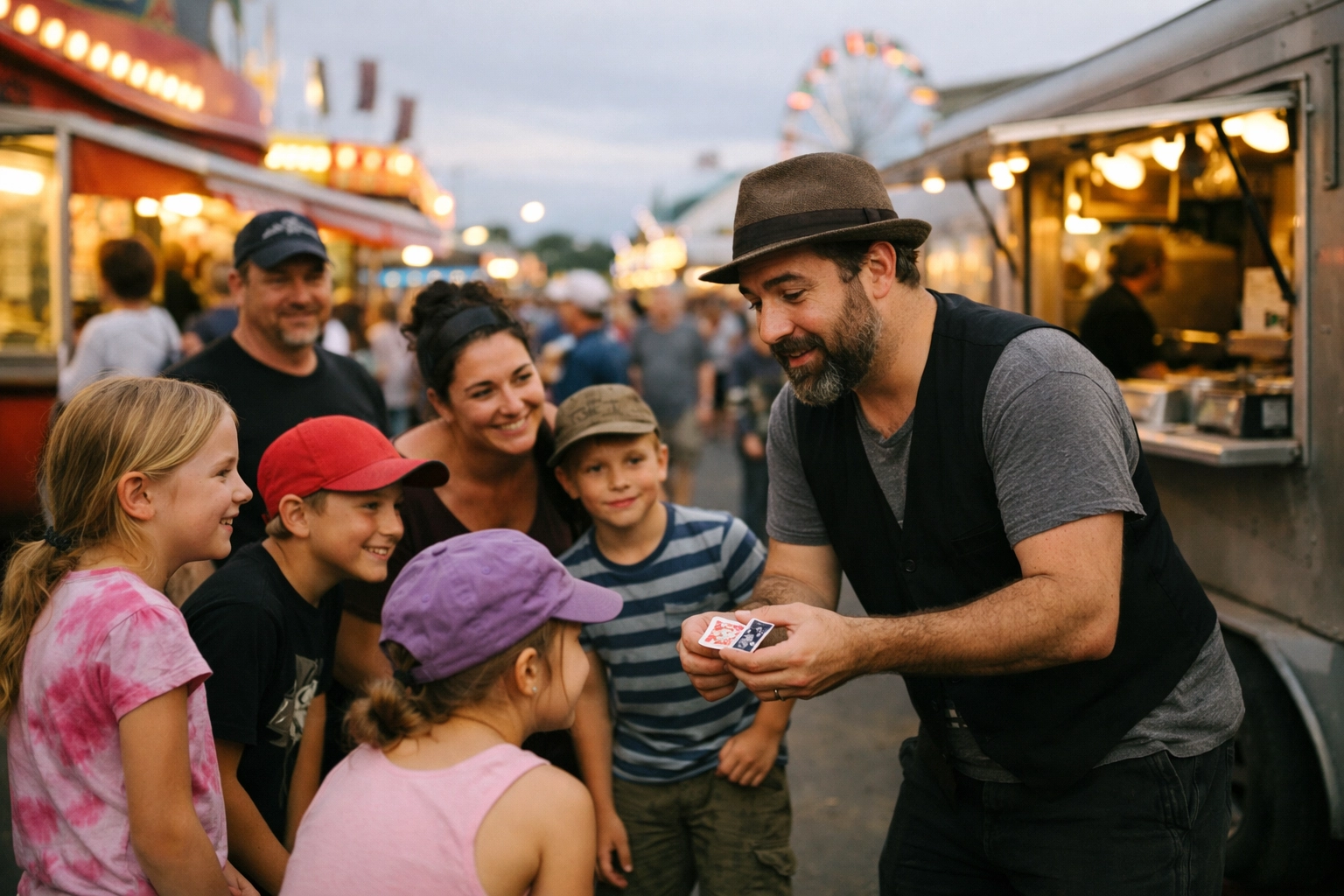
If people won't go to the entertainment, the entertainment must go to the people. Traditional stage acts are great, but roaming entertainers are the heroes of operational flow.
Think about your "Hot Spots": the places where people congregate (like the food court or the line for the washrooms). When you place a magician, a busker, or even a mascot in these areas during the "between" times, you erase the feeling of waiting.
Actually, roaming entertainment is often more memorable than the main stage because it’s personal. It’s the "selfie moment." It’s the story they tell on the ride home.
Don’t just hire a band. Hire a "vibe manager." Someone whose job is to see where the crowd is thinning out and go create a moment right there.
The Gatehouse Gridlock and Parking Strategy
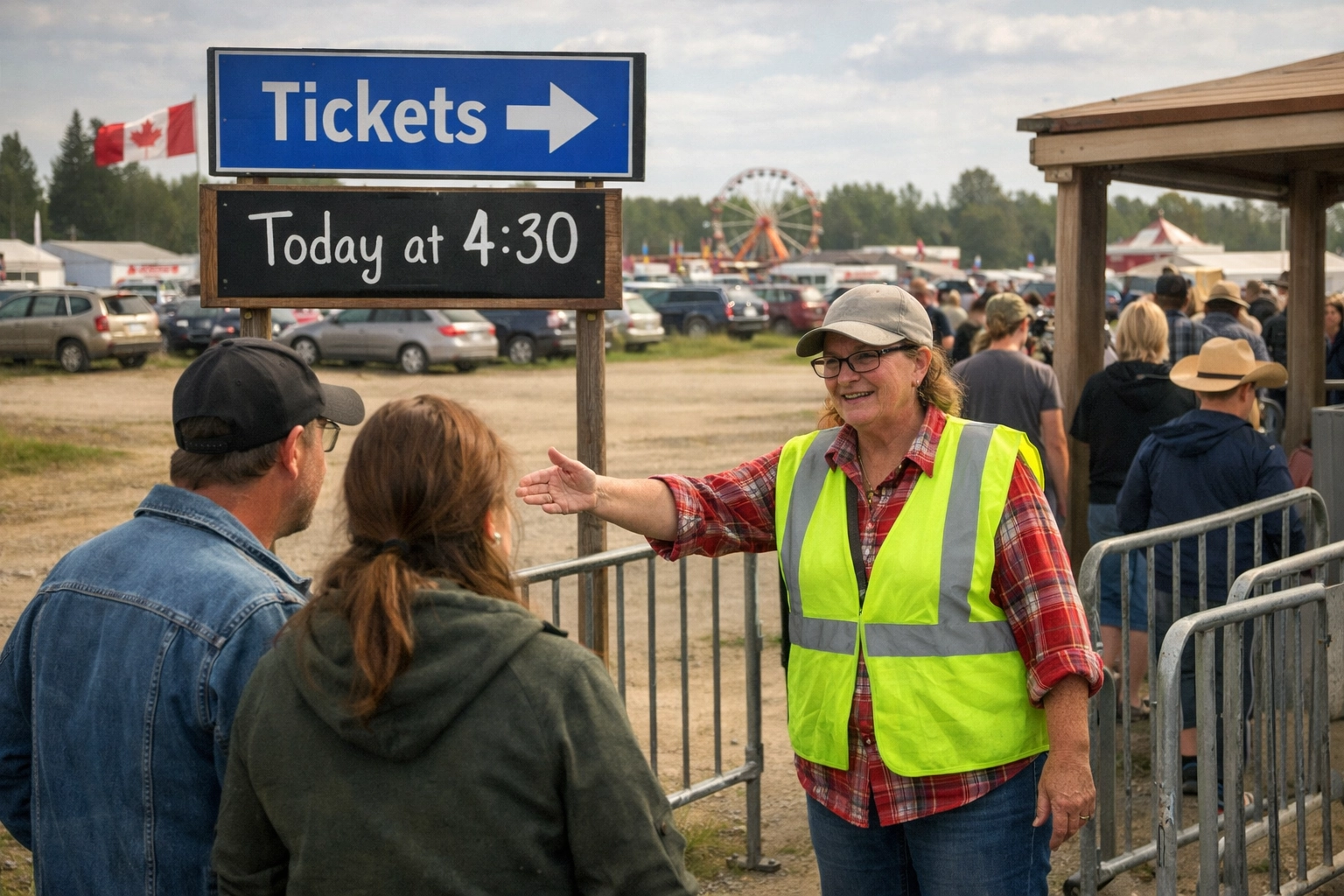
Believe it or not, your parking lot and your gates are part of the entertainment ecosystem. If the entrance experience is a nightmare, the guest is already looking for the exit before they buy a ticket.
Good fair operational planning treats the gate as the "Pre-Show."
Atmosphere starts at the fence. Is there music playing at the ticket line?
Is your parking crew friendly or just stressed?
Do you have signage that tells them what’s happening right now?
When you manage the "Micro-Experience" of arriving, you set the tone for the rest of the day. If they spend 20 minutes frustrated in a dusty parking lot with no direction, they arrive with a "negative credit" in their patience bank. You’ll have to work twice as hard to keep them through the afternoon lull.
Check out our templates and toolkits for ways to streamline your gate operations and keep the "first impression" from being a "last straw."
Filling the Gaps with Low-Commitment Games
You don't need a massive production to keep people busy. Human beings are naturally competitive and surprisingly easy to please with a simple game.
Consider these "Micro-Wins":
Giant Yard Games: Oversized Jenga or Connect Four in the "Dead Zones" (those weird grassy patches no one uses).
The "Communal Canvas": A giant plywood wall where people can paint a mural throughout the day.
Trivia Walls: Chalkboards with a "Question of the Hour" about local history or fair facts.
These activities require zero staff once they are set up. They allow for "Parallel Play": where people are doing their own thing but still feel like they are part of the event.
The Governance Side: Who Owns the "In-Between"?
Here is the hard truth: If no one is assigned to the "In-Between," the "In-Between" will be empty.
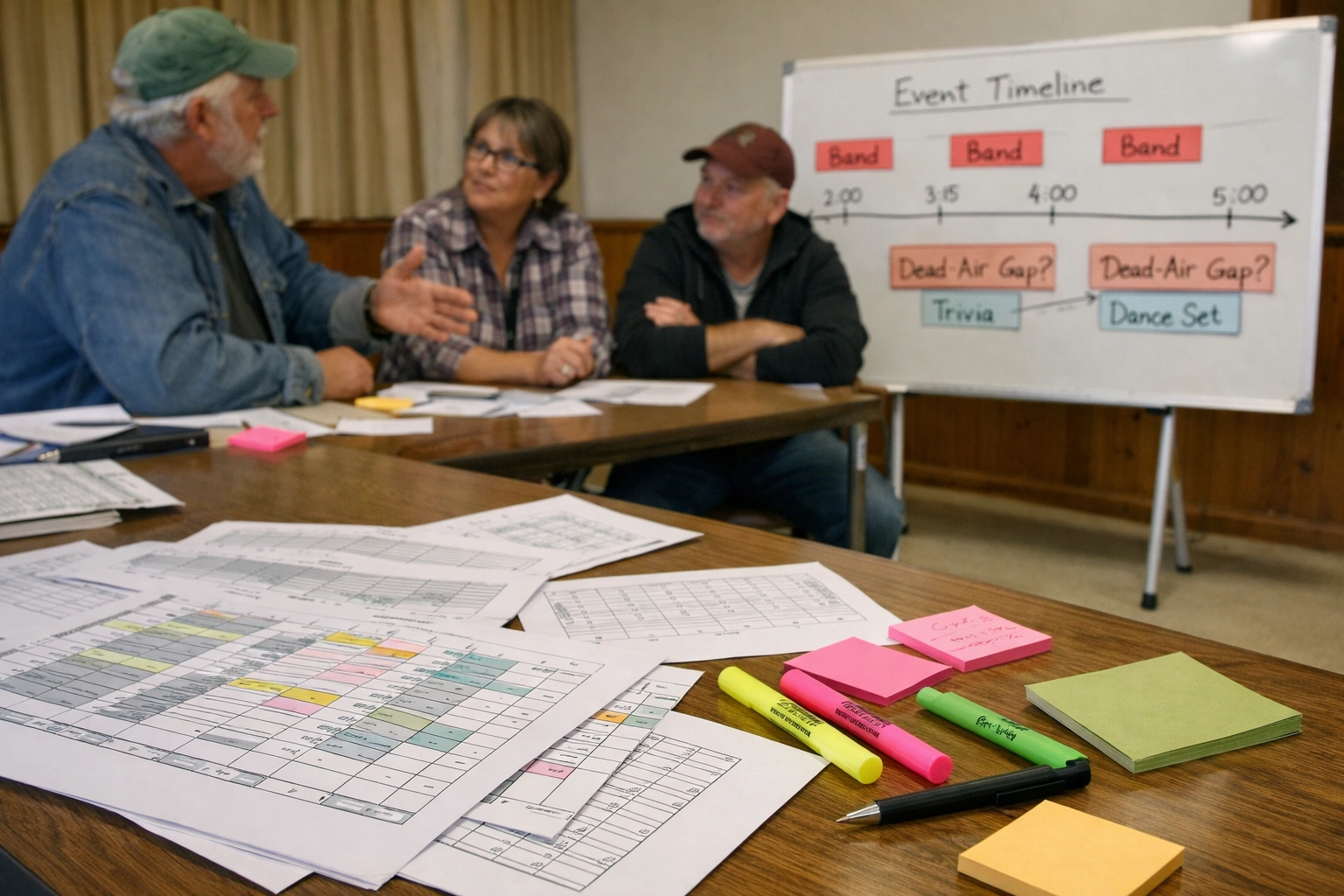
Most boards have a "Grandstand Director" or a "Midway Liaison." But who is the Director of Flow? Who is looking at the schedule and saying, "We have a 45-minute hole here; let's move the petting zoo demonstration to this time slot"?
This is a shift in fair governance. It’s moving away from "Silo Planning" (where everyone does their own thing) and moving toward Systemic Operations.
When you look at your schedule, don't just look for what’s happening. Look for the white space. That white space is where you lose your audience.
Closing the Loop: Keep Them Till the Fireworks
If you want a community event planning guide that actually works, stop focusing on the fireworks and start focusing on the 2:00 PM slump.
When you master Micro-Entertainment, you aren't just "filling time." You are building a culture where there is always something to discover. You turn a "one-and-done" visit into an all-day experience.
It’s about making sure that when the demo derby finally starts at 6:00 PM, the stands are already full because no one wanted to leave.
Don't let the Dead-Air Deadzone kill your momentum. Take a look at your grounds. Find the empty corners. Look for the "white space" on your poster.
Then, fill it with a little magic.
If your board is struggling to bridge the gap between "we've always done it this way" and "we need to keep people on the grounds," let's chat. We specialize in helping Ag Societies move from survival to strategy.
Reach out at Support@fairsystemsthatwork.com or visit our Contact Us page to book a strategy session. Let's make your next fair the one they talk about all winter.
Comments