From Caffeine and Guilt to Calm: Why Your Fair Needs a Volunteer Coordinator

Updated: Mar 13
“Volunteers make the fair happen. The Volunteer Coordinator makes sure it keeps happening.”
The 8:30 AM Panic Attack
It’s 8:30 AM on fair day and the air is already thick with the smell of diesel and deep-fryer grease.
The director in charge of gates is currently juggling three scanners, two cash boxes, and a radio that won’t stop squawking.
The line of people at the main entrance is growing faster than a 4-H calf at feeding time, and the humidity is starting to climb.
Over at the livestock ring, there’s a sudden realization that they are short two volunteers for the morning shift.
The announcer is tapping his microphone, waiting on a schedule that was supposed to be delivered twenty minutes ago.
Down in the beer garden, the space still smells like last night’s country concert, and there isn't a broom in sight.
Conveners are shouting across walkie-talkies, desperately trying to find “anyone with a pulse” to fill the gaps.
You can feel the tension in the air like a storm about to break over the grandstand.
The same five directors are running on caffeine, guilt, and pure muscle memory.
They are trying to hold the whole fair together with nothing but zip ties, duct tape, and a fading sense of goodwill.
And in the middle of all this frantic energy?
No one actually knows who’s supposed to be where.

The High Cost of Haphazard Help
The truth is, most local fairs don’t actually have a volunteer problem.
They have a system problem.
When there’s no central point of contact, your fair becomes a collection of tiny, stressed-out islands.
Every director is too busy running their own specific area to play traffic controller for the rotating door of helpers.
Because of this, no one is holding the master map of who is where, when they started, or why they are there.
Directors become bottlenecks, and conveners end up short-staffed because the follow-up after sign-up day never happened.
Everything becomes reactive rather than proactive.
You aren't planning the fair anymore; you are just surviving the next ten minutes.
This is where the role of a Volunteer Coordinator changes the entire game for an agricultural society.
Moving Beyond Just "Finding People"
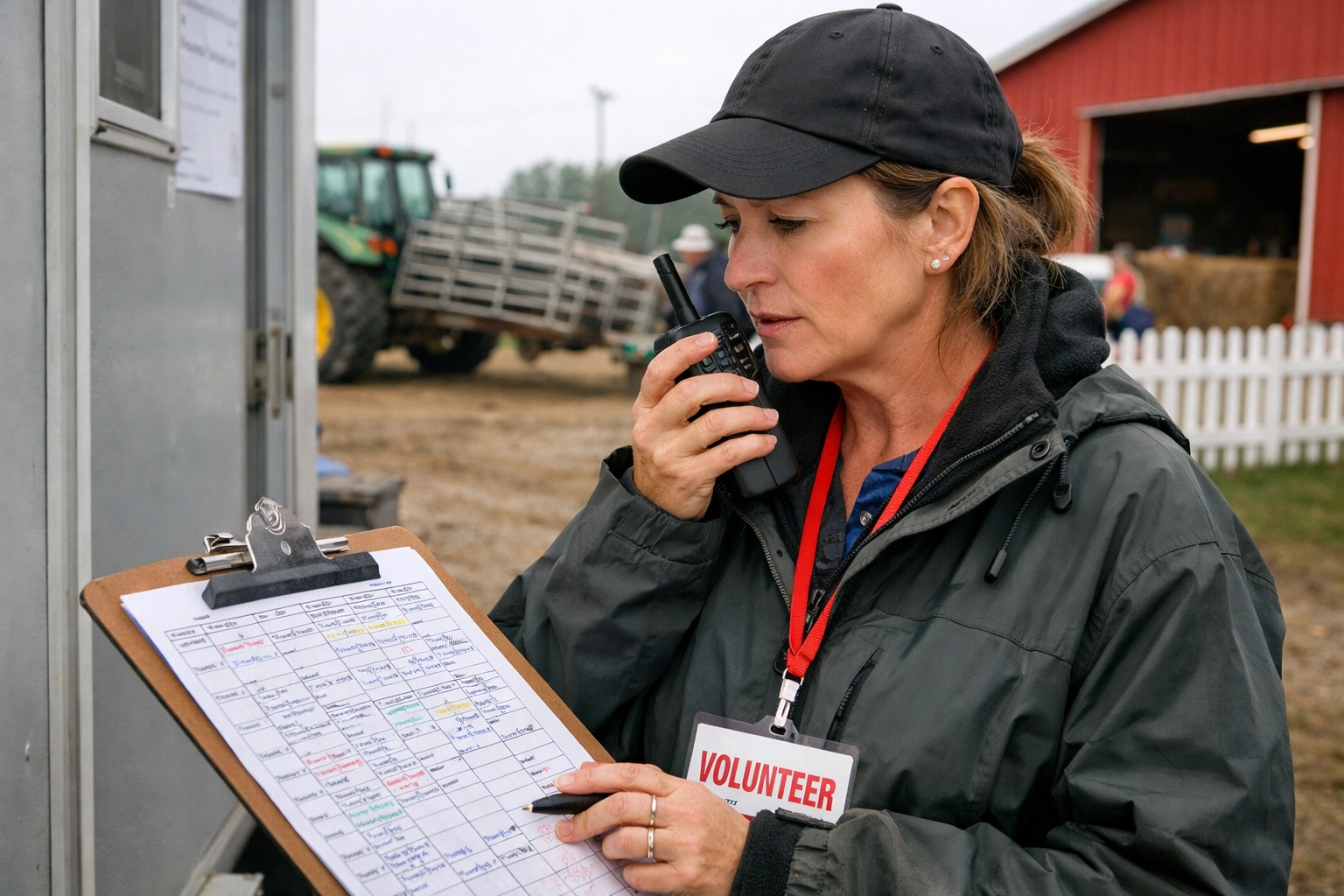
A common misconception is that a Volunteer Coordinator’s job is just to “find people” to fill slots.
If that’s all they did, they’d be a recruiter, not a coordinator.
Their real job is to smooth the chaos before it even starts.
They are the air traffic controllers of your fairgrounds, making sure no two shifts collide and no area is left grounded.
They keep the master schedules filled and, more importantly, they track the check-ins and check-outs in real-time.
When a volunteer doesn’t show up for the poultry show, the Coordinator is already shuffling help from a less-busy area.
This frees your directors to actually focus on the fair itself.
Instead of hunting for someone to take tickets, your Gate Director can actually manage the gates.
It’s not more red tape or another layer of bureaucracy.
It’s the release valve your team didn't know it desperately needed.
The Mechanics of a Smooth System
A Volunteer Coordinator brings a level of administrative management that most boards simply don't have time for.
They manage the recruitment strategies, ensuring you aren't just asking the same three families to do everything.
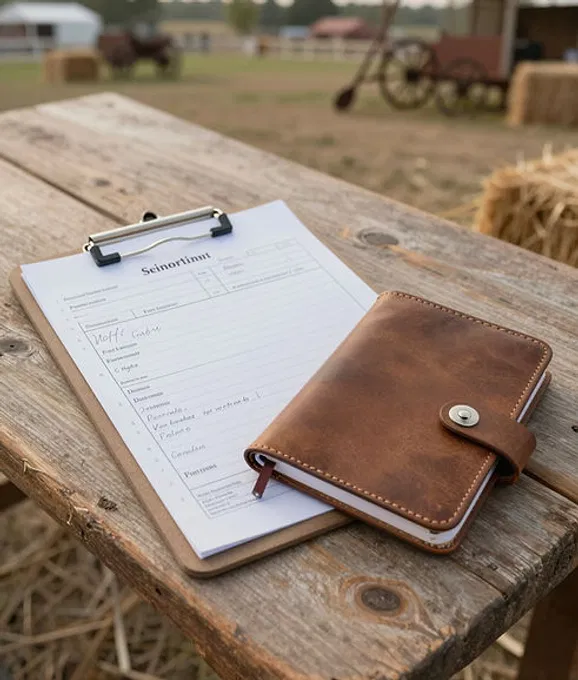
They handle the orientations, the background checks, and the safety training so everyone knows the rules before they step on-site.
This documentation is the backbone of organizational accountability.
By maintaining a volunteer database, they can track hours and generate reports that prove your fair's impact.
They also become the point person for volunteer recognition and appreciation.
Because a volunteer who feels seen is a volunteer who returns next year.
Without this role, the burden of "thank yous" often falls through the cracks in the post-fair exhaustion.
Protecting Your Most Valuable Resource
When your fair runs with a real volunteer system, it’s not just about efficiency or shorter lines.
Burnout doesn’t just happen because the workload is heavy; fairs have always been hard work.
Burnout happens because of disorganization and the feeling of being set up to fail.
When a volunteer arrives and no one knows who they are or where they should go, they feel like a burden.
When they feel seen, supported, and scheduled with purpose, they feel like a hero.
A Volunteer Coordinator protects your legacy by keeping your best people from walking away.
We’ve all seen it happen: a dedicated director quits because they are tired of being the only one who cares.
In reality, they weren't the only one who cared: they were just the only one without a system to back them up.
The coordinator ensures that the knowledge isn't trapped in one person's head.
From Chaos to a Calm Fair Day
Now, let’s imagine a different version of that 8:30 AM scenario.
The gates open right on time because the scanners were charged and the staff was briefed forty-five minutes ago.
The show ring is buzzing, and the announcer has his schedule sitting right next to his coffee.
The beer garden is spotless, and every volunteer knows exactly which shift they are covering and where the extra brooms are kept.
Directors aren’t scrambling; they are actually smiling and talking to the guests.
They aren't looking for “anyone with a pulse” because the pulse of the fair is already steady.
The system is finally working because someone was dedicated to making sure the people were placed correctly.
The "hope and a prayer" method has been replaced by a plan.
Next time your board sits down to plan the exhibition, ask yourselves one very simple question:
“Do we have a Volunteer Coordinator, or are we still just crossing our fingers?”
If your fair is currently running on caffeine, guilt, and hope, it’s time for a change.
It’s time for a Fair Systems Audit.
Let’s make this the year you protect your people, your legacy, and your sanity.
Build a system that works, so you can finally enjoy the fair you worked so hard to create.
Chaos doesn't have to be a tradition.
👉 Book your Fair Audit conversation and let’s build systems that work, chaos not included.
Reach out to us at Support@fairsystemsthatwork.com or visit our Contact Page to get started.
You can also explore our Templates and Toolkits to see how we help simplify fair management.
Let’s turn that 8:30 AM panic into a morning you actually look forward to.
Comments