Does a Rain Plan Really Matter in 2026? The New Reality of Agricultural Fair Management
- Kryssie Thomson

- Mar 10
- 4 min read
The sound of rain hitting a tin roof is usually relaxing.
Unless you are a fair board member on a Friday morning in August.
Then, that rhythmic pitter-patter sounds like money leaking out of a bucket.
We’ve all been there, standing in the middle of the grounds with a lukewarm coffee, staring at a sky the color of an old galvanized trough.
The "omniscient" long-term volunteer is standing next to you, squinting at the clouds.
"It’ll blow over by noon," he says, with the confidence of a man who hasn't checked a weather app since 1994.
He’s usually wrong, but we listen because we want to believe him.
We want to believe that "hope" is a viable operational strategy for agricultural fair management.
But as we head deeper into 2026, the reality of running a local ag society has changed.
The stakes are higher, the weather is weirder, and "winging it" is a recipe for a massive financial headache.
The Decision Nobody Wants to Make
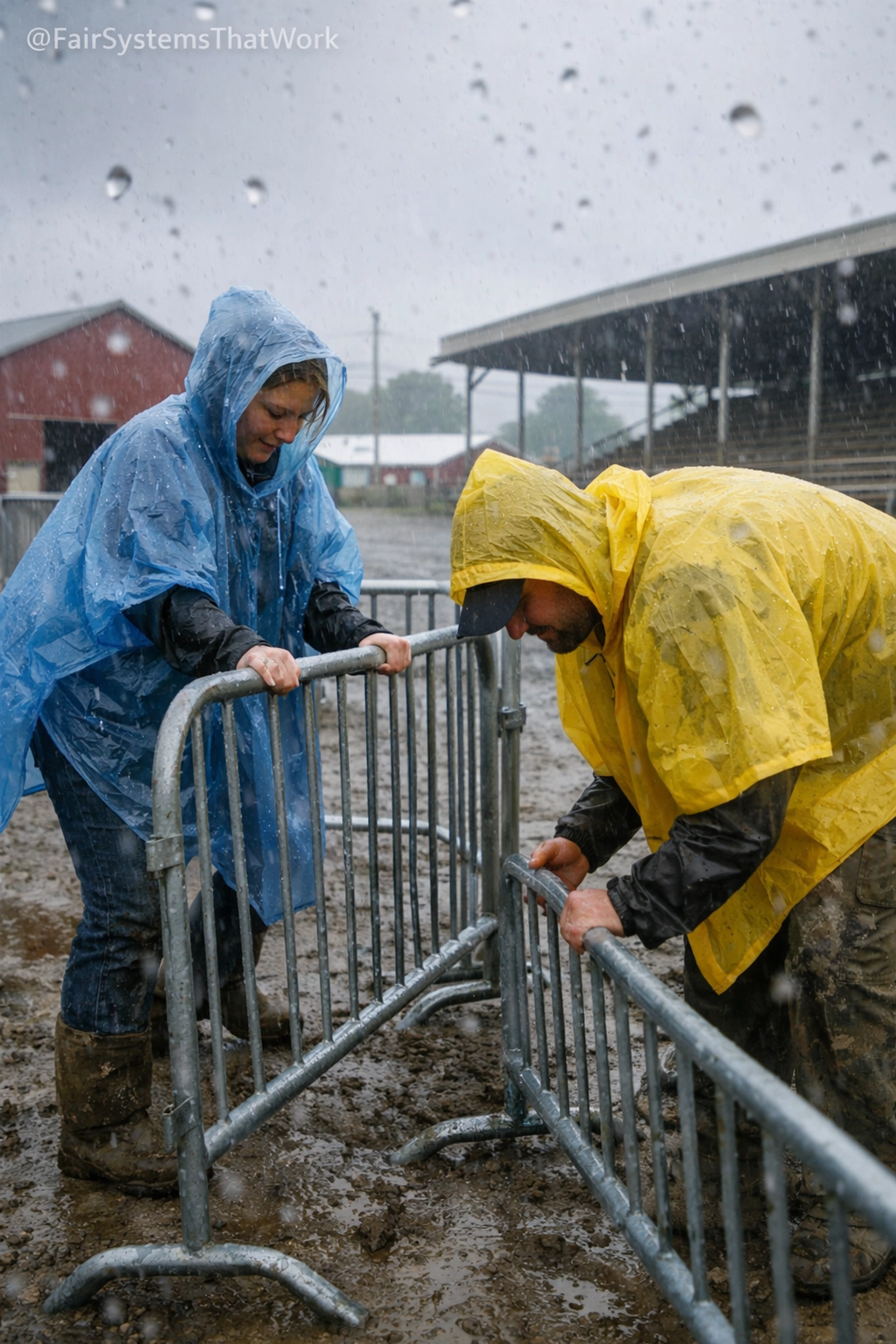
Imagine it’s 6:00 AM on the first big day of your community exhibition.
The parking lot is already a soup of mud, and the midway company is calling to ask if they should even bother leveling the Tilt-A-Whirl.
In most fairs, this is the moment the frantic phone calls start.
Who has the final say on closing the gates?
Is it the President? The Grounds Manager? The person who’s been on the board since the Carter administration?
Usually, it’s a chaotic group chat or a standing circle in the rain where everyone looks at each other, waiting for someone else to be the "bad guy."
This delay isn't just stressful; it’s expensive.
Every hour of indecision is an hour of wasted labor, wasted food prep, and mounting safety risks.
That works. Until it doesn’t.
This isn’t about having a better umbrella.
It’s about having a decision-making chain that doesn't rely on a "vibe check" of the clouds.
A rain plan isn't just about whether or not people get wet; it's about defining the point of no return for your operations.
If you don't have a clear trigger point for shifting to "Plan B," you aren't managing a fair: you’re just gambling with the society’s bank account.
Why "Hope" Is No Longer a Strategy
I see this same pattern across dozens of agricultural societies every year.
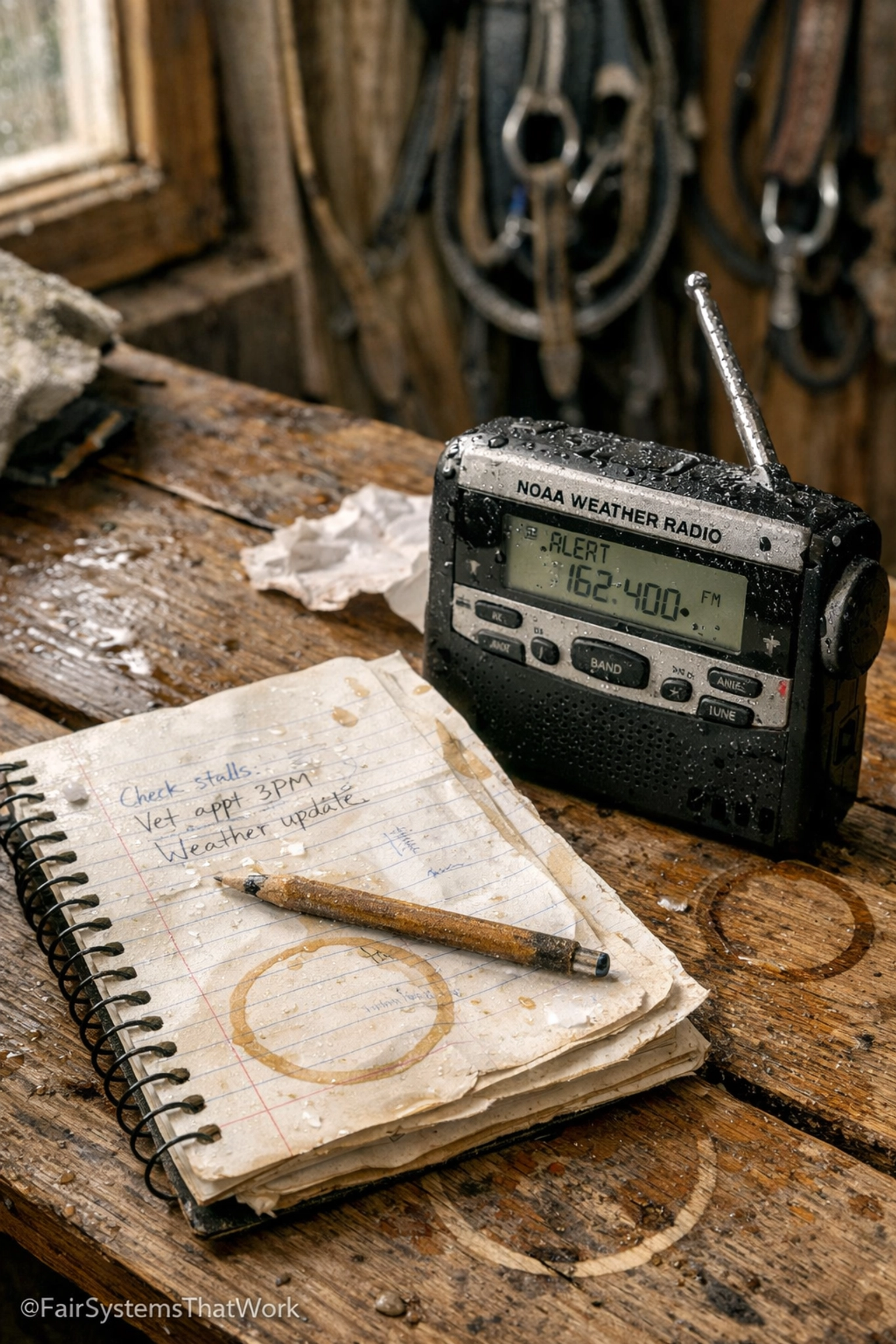
We rely on the "Mystical Binder": that dusty, three-ring relic that supposedly contains all the answers but hasn't been updated since the local fair bought its first computer.
Inside that binder, there might be a map of the grounds, but there is rarely a modern weather protocol.
Many boards treat rain as a personal insult from the universe rather than a predictable business risk.
In 2026, weather patterns are more volatile, and community expectations have shifted.
People don't just "tough it out" in a downpour anymore; they stay home and post about the mud on social media.
If your agricultural fair management strategy assumes perfect sunshine, you are leaving your organization’s legacy to chance.
I’ve talked to boards that spent three hours debating the color of the napkins for the volunteer dinner while their actual emergency plan was just "find a long-term volunteer, they know where the breakers are."
That’s a classic case of focusing on the tablecloths while the barn is flooding.
You can find more about the dangers of "hope-based" planning in our look at the extension cord octopus.
Real tools. Real structure. No fluff.
Shifting from Reactive to Proactive Systems
The new reality of 2026 requires a mindset shift from "surviving the weekend" to "managing the system."
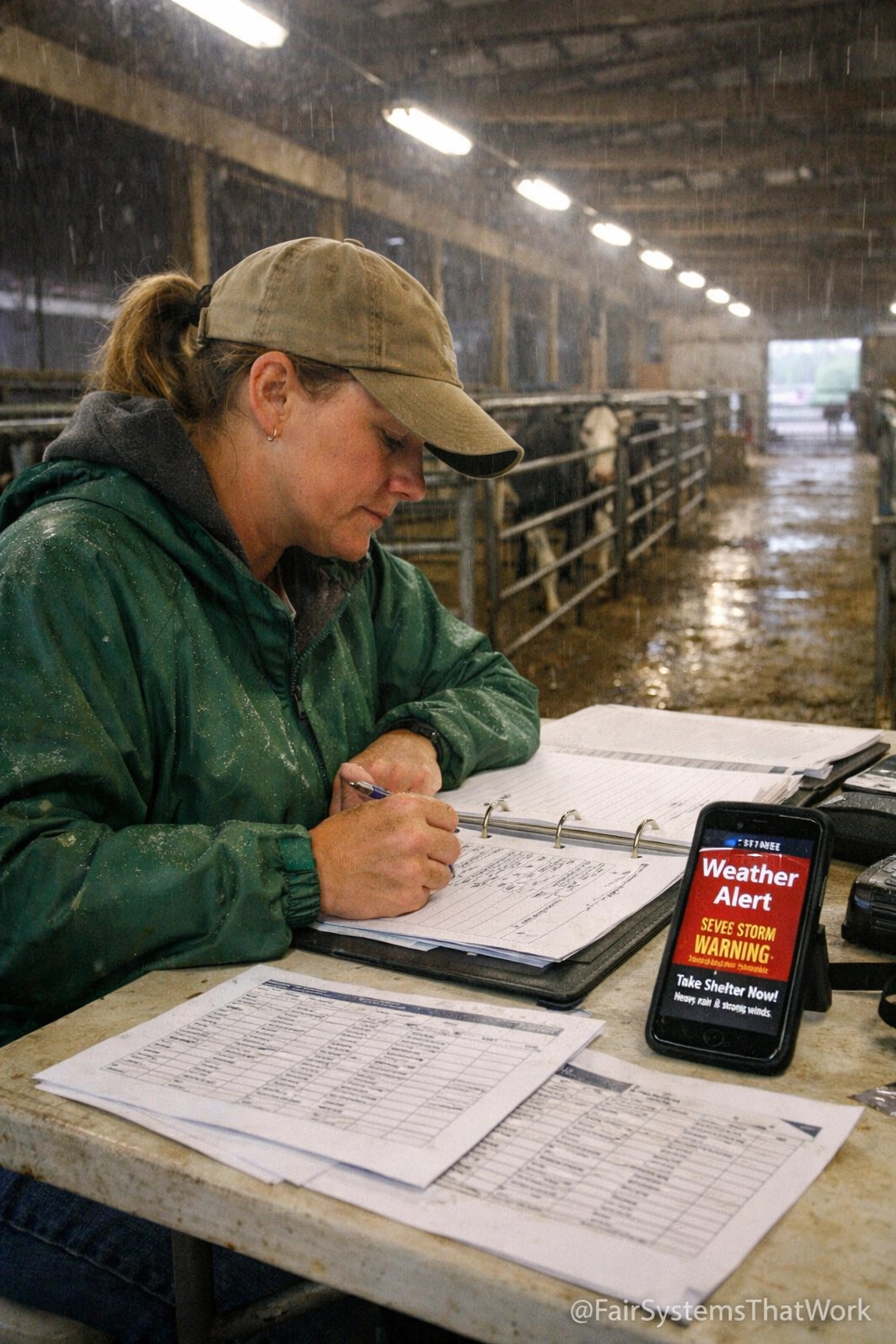
Your rain plan should be a document that makes the hard choices for you before the first drop of water hits the ground.
It should outline exactly what happens to the outdoor stage when lightning is within ten miles.
It should specify which vendors can be moved inside the arena and which ones are out of luck.
Most importantly, it should include a communication plan that reaches your volunteers and the public in minutes, not hours.
When you have a system in place, the stress levels on the board drop by about 80%.
You aren't arguing about the weather; you are simply executing the protocol you all agreed on back in January when it was -20 and everyone was thinking clearly.
This is the core of a solid community event planning guide.
It’s about protecting your people and your profits from the unpredictability of the sky.
If you want to move away from the "Mystical Binder" and toward a system that actually functions, it might be time to work with me.
We don't do grand, unattainable visions here; we do operational survival.
Protecting Your Fair’s Legacy
At the end of the day, a rain plan is a form of respect.
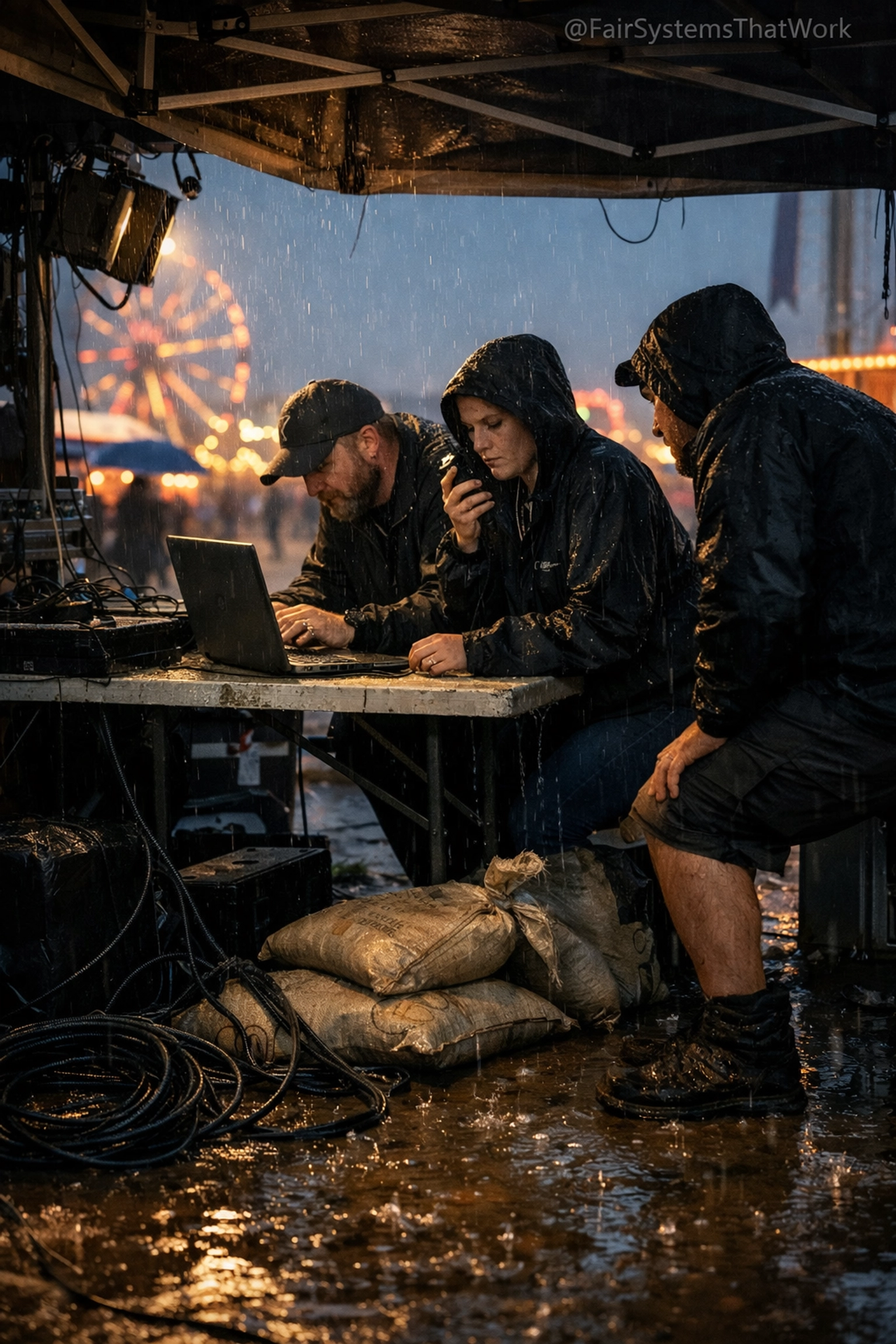
It’s respect for the volunteers who are standing in the mud, waiting for direction.
It’s respect for the vendors who have invested their livelihood into your event.
And it’s respect for the community that looks forward to the fair all year long.
When you have a plan, you aren't at the mercy of the forecast.
You are in control of the response.
The goal of Fair Systems That Work is to ensure that your ag society doesn't just survive 2026 but builds a foundation that lasts another hundred years.
Whether the sun is shining or the parking lot is a lake, your system should be the thing that keeps the lights on.
Stop checking the sky and start checking your protocols.
If you aren't sure where to start, you can always contact us to begin a systems audit.
Let's make sure your fair is held together by more than just optimism and duct tape.
Because in 2026, that rain plan doesn't just matter: it’s the difference between a minor hiccup and a total organizational washout.
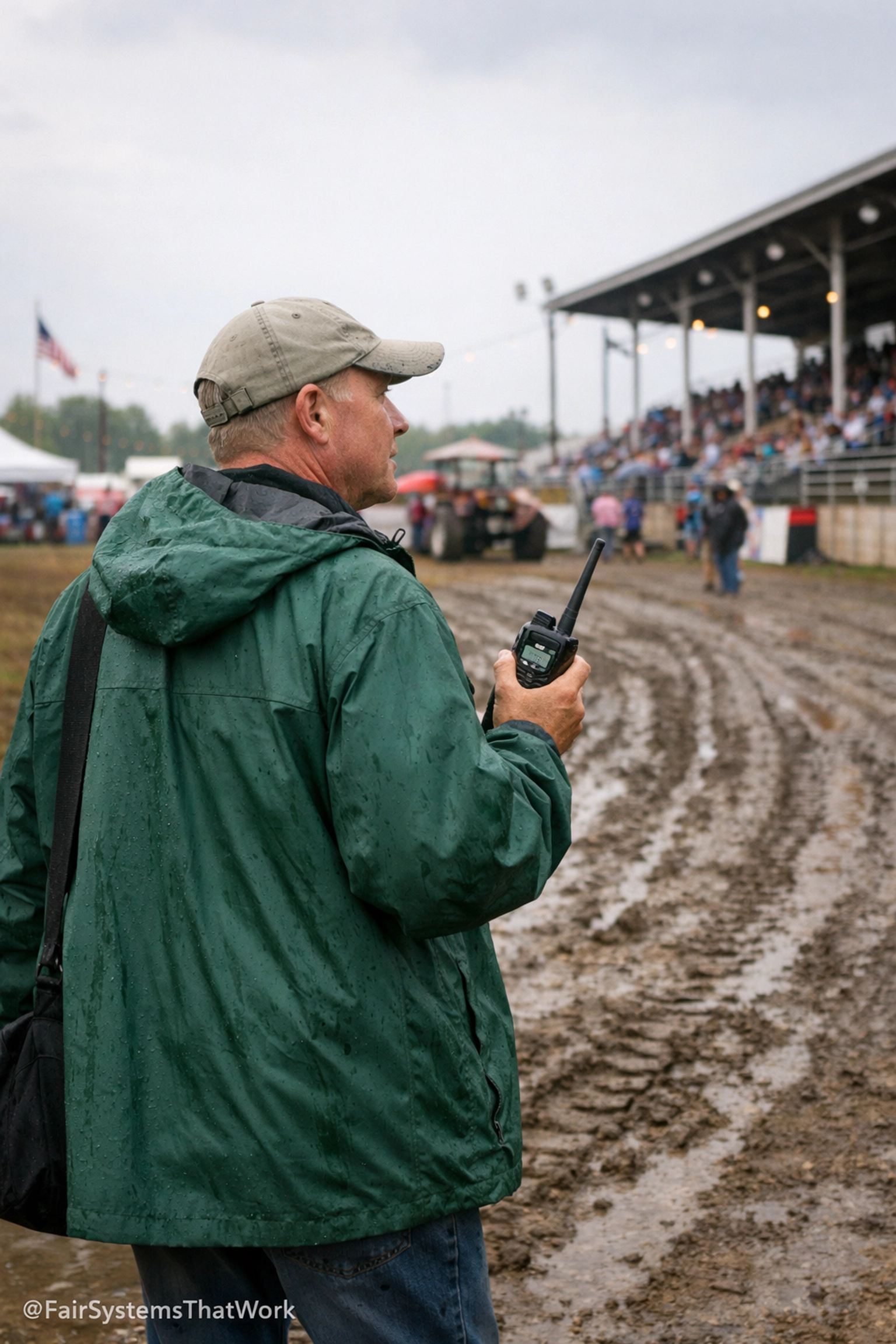
You’ve got a legacy to protect, and a little water shouldn’t be the thing that washes it away.
Build the system. Trust the system.
Then, when the clouds roll in, you can finally finish that coffee in peace.
If you want a hand tightening up your rain plan (without turning it into a 40-page novel), reach out.
Email Support@fairsystemsthatwork.com or use the Contact Us form.
We’ll point you to the next right step.
@FairSystemsThatWork
Comments