Board Governance 101: A Beginner's Guide to Mastering Roles and Responsibilities
- Kryssie Thomson

- Mar 7
- 5 min read
Updated: Mar 8
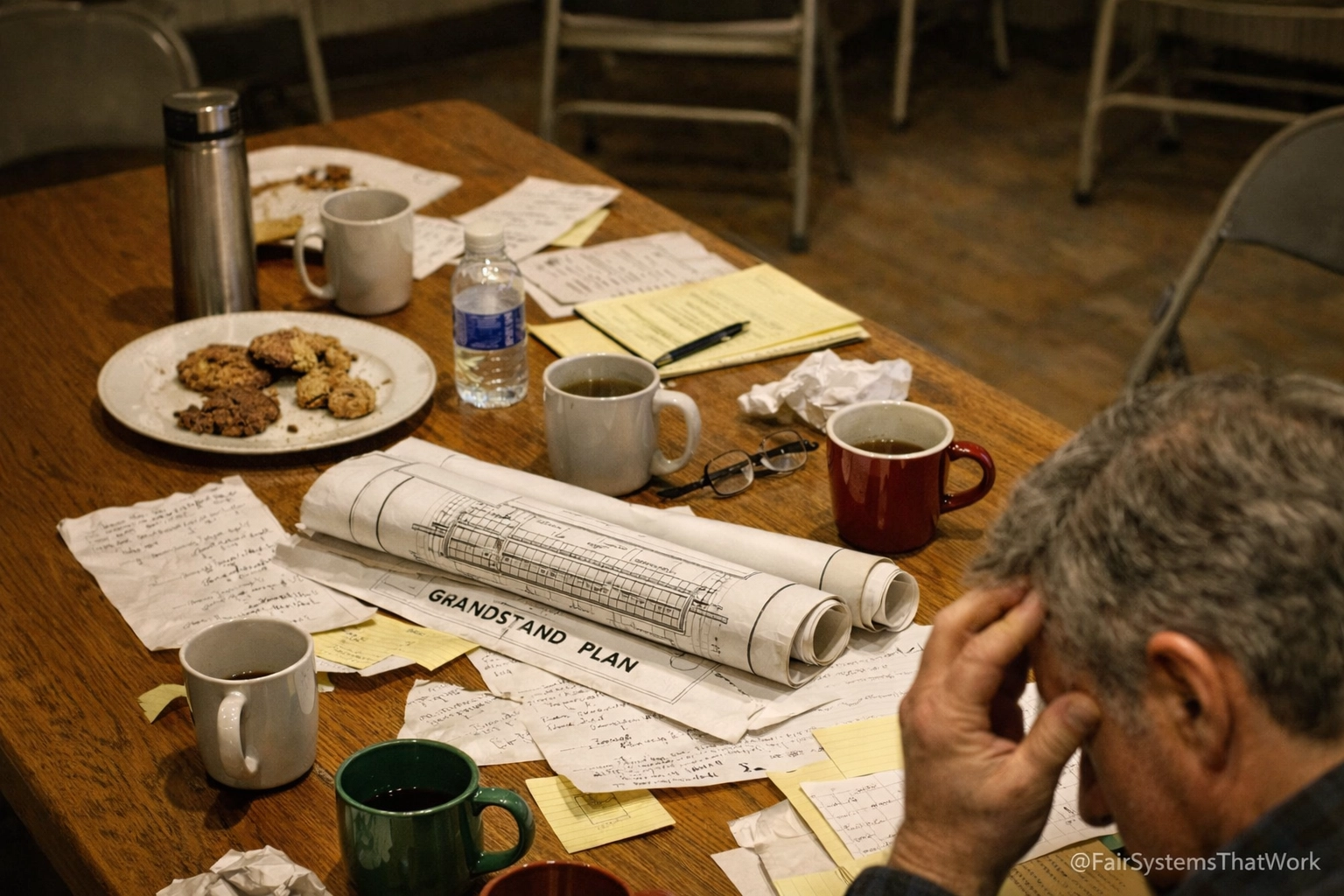
The monthly meeting of a local Ag Society started at 7:00 PM.
By 9:30 PM, the fair board was still debating the exact shade of yellow for the volunteer t-shirts.
Meanwhile, the structural report on the grandstands sat unopened at the end of the table.
The long-time President was trying to record minutes because the Secretary was busy in the kitchen fixing a leaky coffee urn.
The Treasurer was outside helping a vendor park a trailer.
It was a room full of hardworking, well-intentioned people doing absolutely everything except their actual jobs.
This is the "All-Hands-On-Deck" trap that kills fair boards.
When Everyone Is Responsible, No One Is
In the world of agricultural fairs, we pride ourselves on "pitching in."
We’re farmers, makers, and doers who aren't afraid to get our hands dirty.
But when a board of directors functions like a group of emergency responders instead of a leadership team, the fair suffers.
Confusing "work" with "governance" is how major tasks fall through the cracks.
If your Secretary is busy scrubbing floors, who is ensuring your non profit board governance documents are filed correctly with the province or state?
If your President is fixing the extension cord octopus behind the main stage, who is looking at the five-year strategic plan?
Role confusion isn’t just annoying.
It’s an operational risk.
Clear roles prevent the "busy-work" that keeps your board from actually leading.
The Three Hats of Fair Governance
Most ag society board members actually wear three different hats, often in the same hour.
The first is the Governance Hat. This is when you are making big-picture decisions, setting policies, and protecting the legal health of the society.
The second is the Volunteer Hat. This is when you put on your boots and go help set up the cattle barns or hang posters in town.
The third is the Representative Hat. This is when you are at the grocery store and a neighbor asks why the gate prices went up.
The problem starts when we forget which hat we are wearing during a meeting.
A board meeting is for the Governance Hat.
If you spend your board meeting talking about who is bringing the potato salad for the volunteer appreciation lunch, you aren't governing.
You’re just having a very expensive, very long conversation.
Defining the Ag Society Board Structure
To fix the chaos, we have to go back to the basics of board of directors roles and responsibilities.
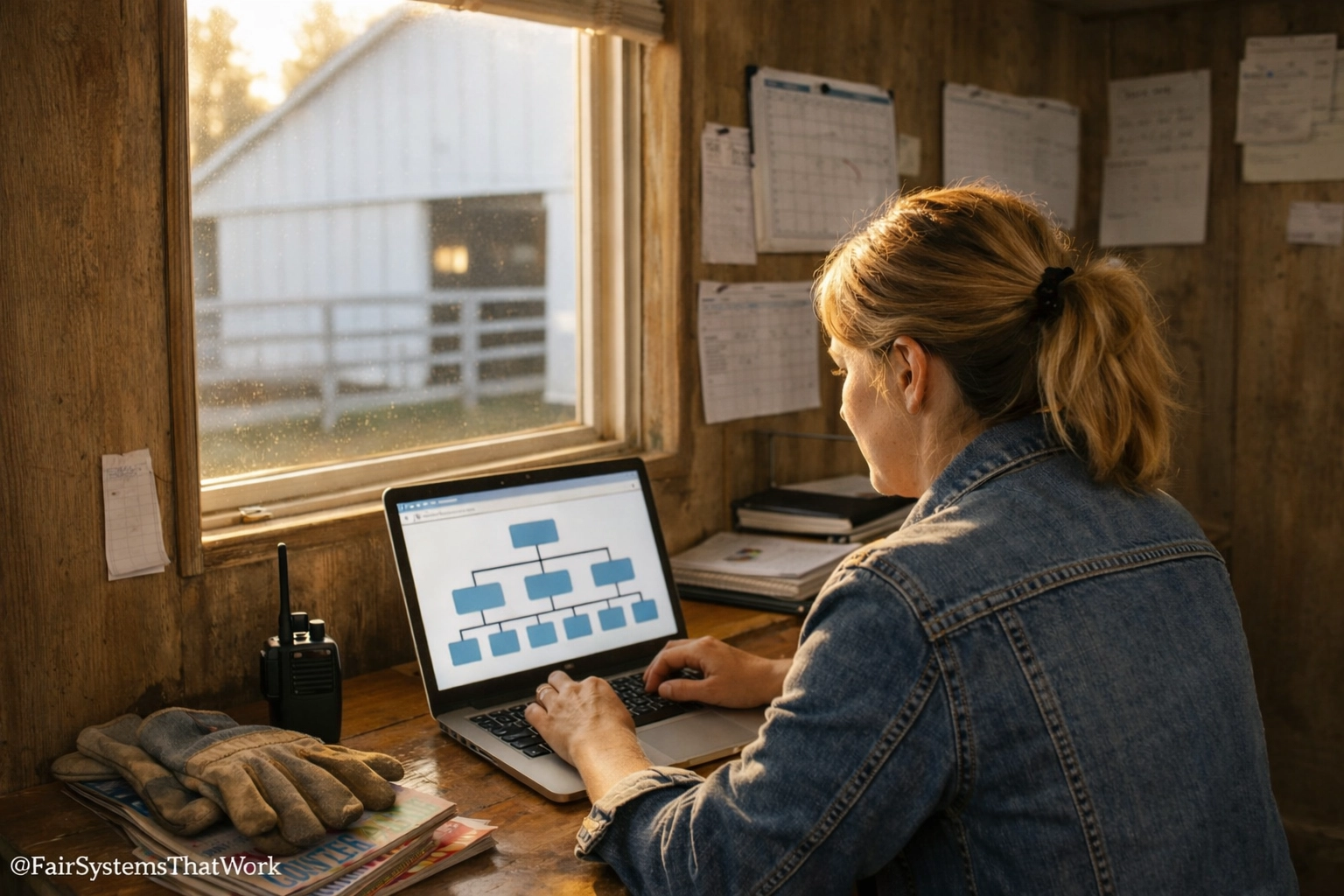
Every ag society needs a clear hierarchy, even if you only have five people on the board.
The President: They are the "Chief Culture Officer" and the meeting facilitator. Their job isn't to do everything; it’s to make sure everyone else is doing their thing.
The Vice President: They are the President-in-training and usually the person who handles special projects or committee oversight.
The Secretary: They are the guardian of the history and the legal record. In fair governance, a good Secretary is the difference between a smooth audit and a nightmare.
The Treasurer: They aren't just the "money person." They are the financial storyteller who helps the board understand if they can actually afford that new tractor.
Directors at Large: These folks shouldn't just be "warm bodies" in seats. They should have specific oversight areas, like "Director of Livestock" or "Director of Marketing."
When these roles are vague, people default to what they are comfortable with, which is usually the "doing" rather than the "leading."
The Governance vs. Management Divide
This is where it gets tricky for small fairs.
In a large corporation, the board sets the goal and the staff does the work.
In an ag society, the board often is the staff.
However, you must separate the two in your head.
"Management" is deciding how many garbage cans we need for the midway.
"Governance" is deciding the budget for the waste management contract and setting the standard for grounds cleanliness.
If your board is spending 40 minutes debating garbage cans, you are managing, not governing.
Effective ag society board structure requires a "Policy First" mindset.
Create the policy, then let the committee or the staff member execute it.
If your board is debating the price of napkins, you’ve lost the plot of governance.
The Mystical Binder and the Power of Documentation
We’ve all seen it: the dusty, three-ring binder that "Old Bob" carries around.
It contains the secrets of the fair, the vendor lists from 1994, and the only copy of the bylaws.
This is not a governance system; it’s a hostage situation.
Proper non profit board governance requires that information is accessible, transparent, and updated.
Every role should have a "Position Description" that is more than just two sentences in the bylaws.
It should list the time commitment, the specific duties, and who they report to.
When a new person joins your board, they shouldn't have to guess what they are supposed to do.
They should be handed a folder (digital or physical) that outlines exactly where their lane begins and ends.
Documentation is the only way to protect your fair’s legacy from "the way we’ve always done it."
Transitioning from Chaos to Clarity
So, how do you start fixing a board that has been "winging it" for decades?
Start with a "Roles Audit."
Ask every board member to write down the top three things they think they are responsible for.
You’ll be shocked at the overlap: and the gaps.
Next, move the "operational" talk out of the board meeting and into committees.
If the Entertainment Committee wants to hire a specific band, let them vet the contract and just bring the final recommendation to the board for a vote.
This keeps the board meeting focused on the "Why" and the "How Much," rather than the "Who" and the "What."
If you need a head start on this, our templates and toolkits are designed specifically for ag societies who need to get organized fast.
Governance is a Gift to Future Volunteers
The biggest reason we fail at board governance is that we think roles are "too formal" for a community group.
But clear roles are actually a form of kindness.
They prevent burnout by ensuring one person isn't doing five jobs.
They prevent conflict by showing exactly who has the final say on a decision.
And most importantly, they make it easier for new, younger volunteers to step up.
Nobody wants to join a board where the meetings are three hours of aimless arguing.
Everyone wants to join a winning team that knows where it's going.
A well-governed board is the best recruitment tool you have.
Next Steps for Your Board
If your meetings feel like a circus (and not the fun kind with popcorn), it's time to reset.
Review your bylaws. Are they from this decade?
Create simple one-page job descriptions for every officer.
Use a "consent agenda" to skip the small stuff and focus on big decisions.
If you’re feeling overwhelmed by the transition, you don’t have to do it alone.
I work with fair boards across the country to streamline their systems and get them back to the work they love.
Whether it's through speaking and training or a deep-dive audit, we can build a system that actually works for your society.
Stop scrubbing the coffee urn and start leading the fair.
Your community: and your sanity will thank you.
Comments